

You’ve tried a night guard, seen a physiotherapist or followed advice to manage your jaw pain, but the discomfort is still there. Perhaps you’ve had some temporary relief, only for the symptoms to return. Or maybe nothing you’ve tried has made much difference.
If this sounds familiar, it’s understandable to feel frustrated, particularly when you’ve invested time and effort into treatment.
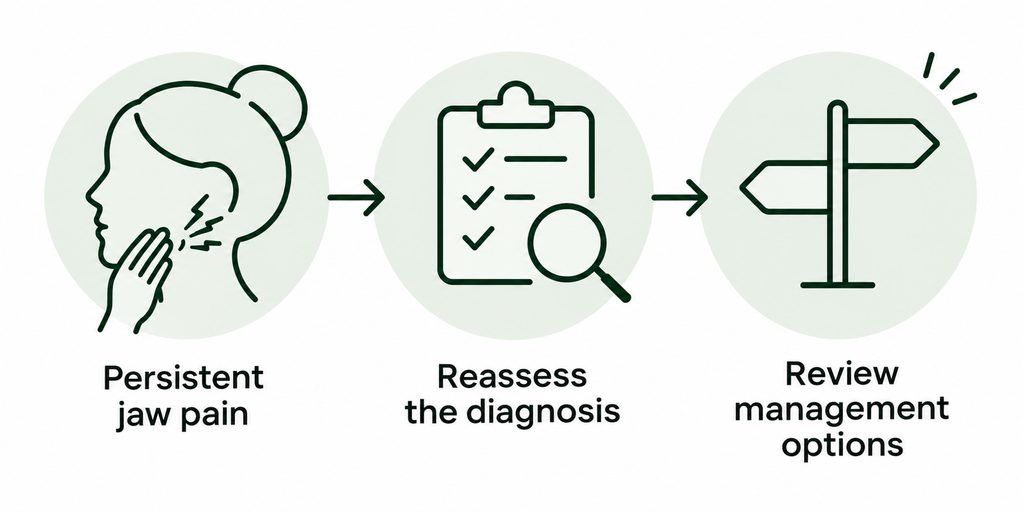
Persistent jaw pain doesn’t necessarily mean that nothing can be done. However, it may be a sign that your original diagnosis, contributing factors or treatment approach need to be reconsidered.
Rather than continuing with the same treatment or moving straight to another option, a fresh assessment can help clarify what may be contributing to your symptoms.
Why might jaw pain continue despite treatment?
Jaw pain can be complex, and there isn’t always one straightforward explanation for why symptoms persist.
Some people experience pain associated with the jaw muscles or temporomandibular joints (TMJs), while others may have dental problems, headache disorders, nerve-related pain or symptoms referred from surrounding areas.
More than one factor may also be contributing to the discomfort.
For example, an appliance designed to protect teeth from grinding may be helpful for dental wear but may not address another source of facial pain. Similarly, treatment directed at tight jaw muscles may have limited benefit if the pain is coming from a different structure.
This is why understanding the underlying problem is just as important as choosing a treatment.
If you’ve previously been diagnosed with a temporomandibular disorder (TMD), ongoing symptoms may warrant a closer look at whether that diagnosis still explains what you’re experiencing.
What if you’ve already tried several treatments?
People with ongoing jaw pain often arrive at an appointment having already explored a range of options.
These may include:
- Night guards, dental splints or other oral appliances.
- Physiotherapy, massage or jaw exercises.
- Pain-relieving or anti-inflammatory medication.
- Muscle relaxant injections or Botox.
- Heat therapy, dietary changes or other self-management strategies.
Some treatments may have helped temporarily, while others may not have provided noticeable improvement.
The important question isn’t simply which treatment to try next, but why the previous approaches haven’t achieved the intended result.
For example, if you’ve been wearing a dental appliance without improvement, it may be worth reviewing its purpose, fit and suitability alongside the original diagnosis.
Our article on whether a night guard can make TMJ symptoms worse explores some of the considerations involved.
Repeatedly changing treatments without reassessing the underlying problem may not provide the clarity you need.
When should your jaw pain diagnosis be reconsidered?
If your symptoms haven’t improved as expected, have changed over time or don’t seem to match the original diagnosis, a reassessment may be appropriate.
This doesn’t necessarily mean the initial diagnosis was incorrect. Symptoms can evolve, and additional contributing factors may become apparent over time.
A clinician may need to consider:
- Jaw joints: Whether joint movement, inflammation or other joint-related problems may be relevant.
- Jaw muscles: Whether muscle tenderness, overactivity or movement patterns contribute to your familiar pain.
- Teeth and dental health: Whether a dental condition or changes in your bite need further investigation.
- Headaches and facial pain: Whether another pain condition may be involved.
- Sleep and general health: Whether sleep difficulties, medications or other health factors may be relevant.
- Neck and surrounding structures: Whether symptoms could be influenced by pain referred from another area.
Not all facial or jaw pain is caused by TMD. Depending on the findings, your clinician may recommend assessment by another health professional.
What happens during a reassessment for persistent jaw pain?
A reassessment is an opportunity to look at the whole picture rather than focusing only on the treatment you’ve already received.
Your clinician will generally begin by reviewing your symptoms, how they developed and how they’ve changed over time.
Your clinician will generally begin by reviewing your symptoms, how they developed and how they’ve changed over time. As part of this discussion:
- They may ask about previous diagnoses, treatments you’ve tried, what helped or made things worse, and how the pain affects your daily activities.
- They’ll also review your medical history and current medications, including any history of headaches, pain elsewhere in the body, sleep difficulties, or neck and other muscle or joint problems.
- Where relevant, they may ask about previous injuries, jaw clenching or grinding, stress and emotional wellbeing.
Understanding this broader picture helps guide your assessment and develop a management plan suited to your individual needs.
A clinical examination may include assessing:
- How comfortably and widely you can open your mouth.
- How your jaw moves and whether movement reproduces your familiar symptoms.
- Tenderness in the jaw muscles and surrounding areas.
- The function of your jaw joints.
- Your teeth, bite and any existing oral appliances.
- Other symptoms that may suggest a different source of pain.
Imaging or additional investigations aren’t automatically required for everyone. They may be recommended when there is a specific clinical question that cannot be answered through the history and examination alone.
At TMJ Centre Melbourne, a TMJ assessment considers your symptoms, jaw function and relevant contributing factors to help guide appropriate recommendations.
Should you seek a second opinion for ongoing jaw pain?
If you’ve tried treatment without meaningful improvement, a second opinion may be worthwhile, particularly if you’re unsure about your diagnosis or what to do next.
A second opinion doesn’t necessarily mean starting treatment again from scratch.
Instead, it provides an opportunity to review what has already been investigated, consider how you’ve responded to previous treatment and determine whether anything requires further assessment.
For some patients, this may lead to a revised management approach. For others, it may confirm that the current diagnosis and treatment plan remain appropriate, or identify a need for referral.
A second opinion cannot guarantee a new diagnosis or a better treatment outcome, but it may help you make more informed decisions about your next steps.
When should you seek further assessment?
Consider arranging a review if:
- Your jaw pain continues despite following the recommended treatment plan.
- Symptoms are becoming more frequent or are affecting everyday activities.
- You’ve developed new symptoms, such as restricted jaw movement or locking.
- You’ve tried several treatments without a clear understanding of why they haven’t helped.
- You’re unsure whether your current diagnosis explains all your symptoms.
New or worsening symptoms shouldn’t automatically be attributed to TMD. Severe symptoms, particularly following trauma or accompanied by significant swelling, fever, neurological changes or difficulty swallowing or breathing, may require urgent medical assessment.
Taking the next step when jaw pain persists
Living with ongoing jaw or facial pain can be frustrating, especially when you’ve already tried to address it.
But persistent symptoms don’t necessarily mean you need more of the same treatment.
Sometimes the most useful next step is to reconsider the diagnosis, review what’s already been tried and identify whether other factors need attention.
At TMJ Centre Melbourne, our dentists have a clinical focus on temporomandibular disorders and orofacial pain. We assess jaw function, muscles, joints and pain patterns to help understand what may be contributing to your symptoms.
Where appropriate, this may involve recommendations for further management, investigation or referral to another health professional.
If your jaw pain hasn’t improved despite treatment, a comprehensive assessment may help clarify your options and what to consider next.