
Patient Hub · New Patients
Your first visit to TMJ Centre Melbourne
Your first appointment is designed to understand your symptoms, examine the jaw, muscles and related areas, and identify what may be contributing to your jaw, facial, head or neck pain or dysfunction.
The aim is to provide a clearer clinical impression, explain the likely source of your symptoms and guide the most appropriate next steps.

What to expect
A first visit designed around understanding, not assumptions
Many people come to TMJ Centre Melbourne after dealing with symptoms for some time. Some have already tried treatment, been told their scans are normal, or received mixed advice about whether the problem is coming from the jaw, teeth, muscles, joints, neck, sleep or headaches.
Your first visit is designed to look more carefully at what type of pain or dysfunction may be present. This may include joint pain, muscle pain, referred pain, bruxism-related overload, limited jaw movement, locking, headache overlap, neck contribution or sleep-related factors.
The goal is not simply to confirm that you “have TMJ”. The goal is to understand the likely source of your symptoms, what may be keeping them going, and what type of care is most appropriate.
At a glance
Initial consultation
- Approx. 60 minutes
- Detailed history and structured TMJ assessment
- Bring splints or night guards if you have them
- send reports/scans in advance if you have them
- No referral required
- Suite 901, 227 Collins Street, Melbourne
Practical details
Visiting the clinic
Location
Suite 901, 227 Collins Street, Melbourne VIC 3000. Opposite Town Hall station or a few mins walk from Flinders Street station. Nearby paid parking options are available.
Appointment length
Initial TMJ assessments are approximately 60 minutes.
Fees & payment
An initial consultation with a dentist is $300. This includes your history, clinical assessment, discussion of findings and recommended next steps. Payment plans may be available through DentiCare, where appropriate.
Referrals
You do not need a referral to make an appointment. If you have been referred by another practitioner, please bring any referral information.
GET IN TOUCH
TMJ Centre Melbourne
Suite 901, 227 Collins Street, Melbourne VIC 3000
509 Princess Hwy, Narre Warren VIC 3805 (by appt only on Fridays only)
Before you arrive
Bring what you already have
You do not need a referral or scans before attending unless you already have them.
Bringing existing information helps your clinician understand your history.
It can also help to note when your symptoms started, what seems to make them worse, and whether they affect chewing, sleep, headaches or daily comfort.
Helpful To Bring
- Referral letters
- Reports or scans
- Current splints or night guards
- Details of previous treatment
- A list of current medications
- Notes about your symptoms
During your appointment
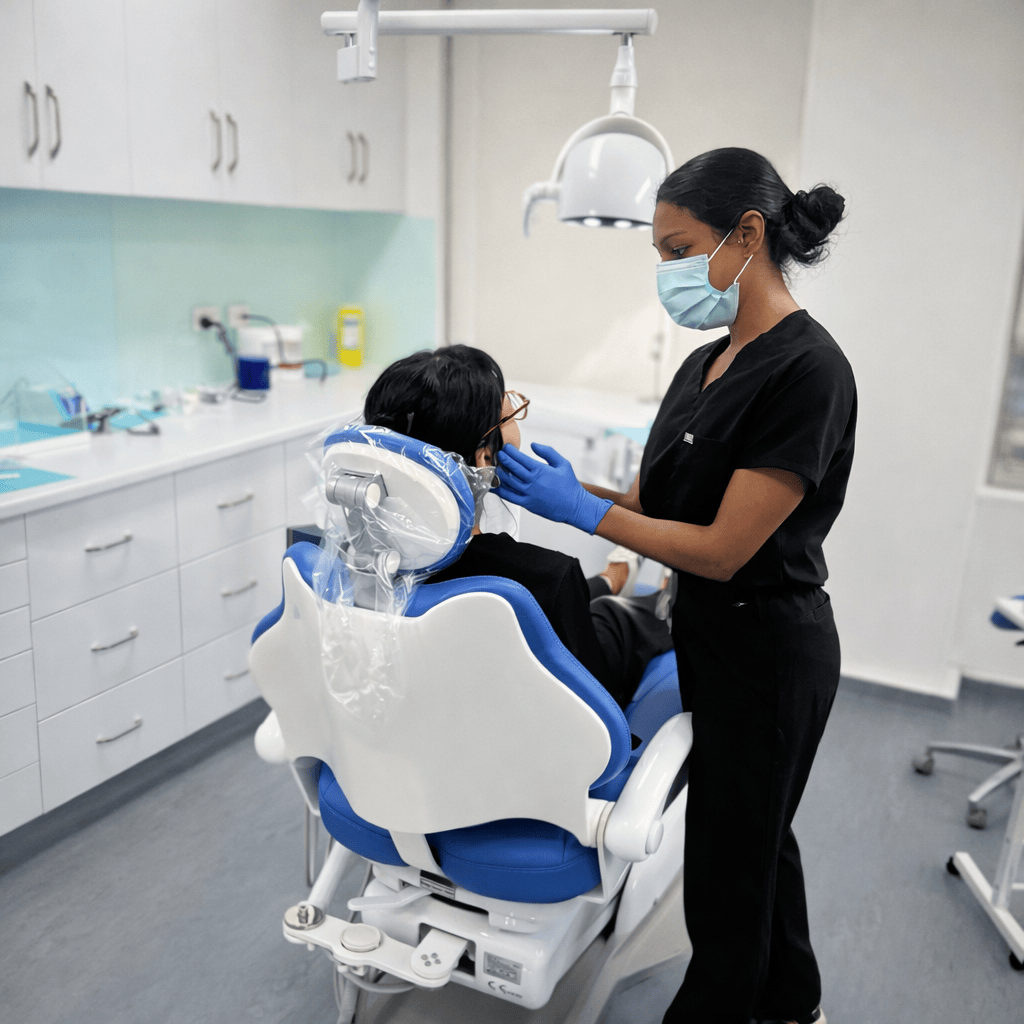
A structured, diagnosis-led assessment
Treatment on the first visit?
Treatment can sometimes begin at the first visit if it is appropriate for your presentation and your clinician has enough information to guide care.
Sometimes, further information is needed before a treatment plan can be finalised. This may include imaging, communication with another practitioner, review of previous records or diagnostic testing. This helps ensure that treatment is guided by your diagnosis, clinical findings, symptoms and goals, rather than following a one-size-fits-all approach.
What you will leave with
A clearer understanding and a practical next step
At the end of your first appointment, you should have a clearer understanding of your assessment findings and recommended next steps.
- An explanation of the likely source of pain or dysfunction
- A clinical diagnosis or working diagnosis
- Whether symptoms appear to be joint-related, muscle-related, referred, bruxism-related, headache-related, sleep-related or influenced by several factors
- A summary of relevant jaw, muscle, bite, postural, sleep or lifestyle findings
- Suitable treatment options, if appropriate
- Whether further scans, diagnostic tests, medical review or referral may be needed
- Clear next steps
A clear diagnosis is the foundation of an effective treatment plan.
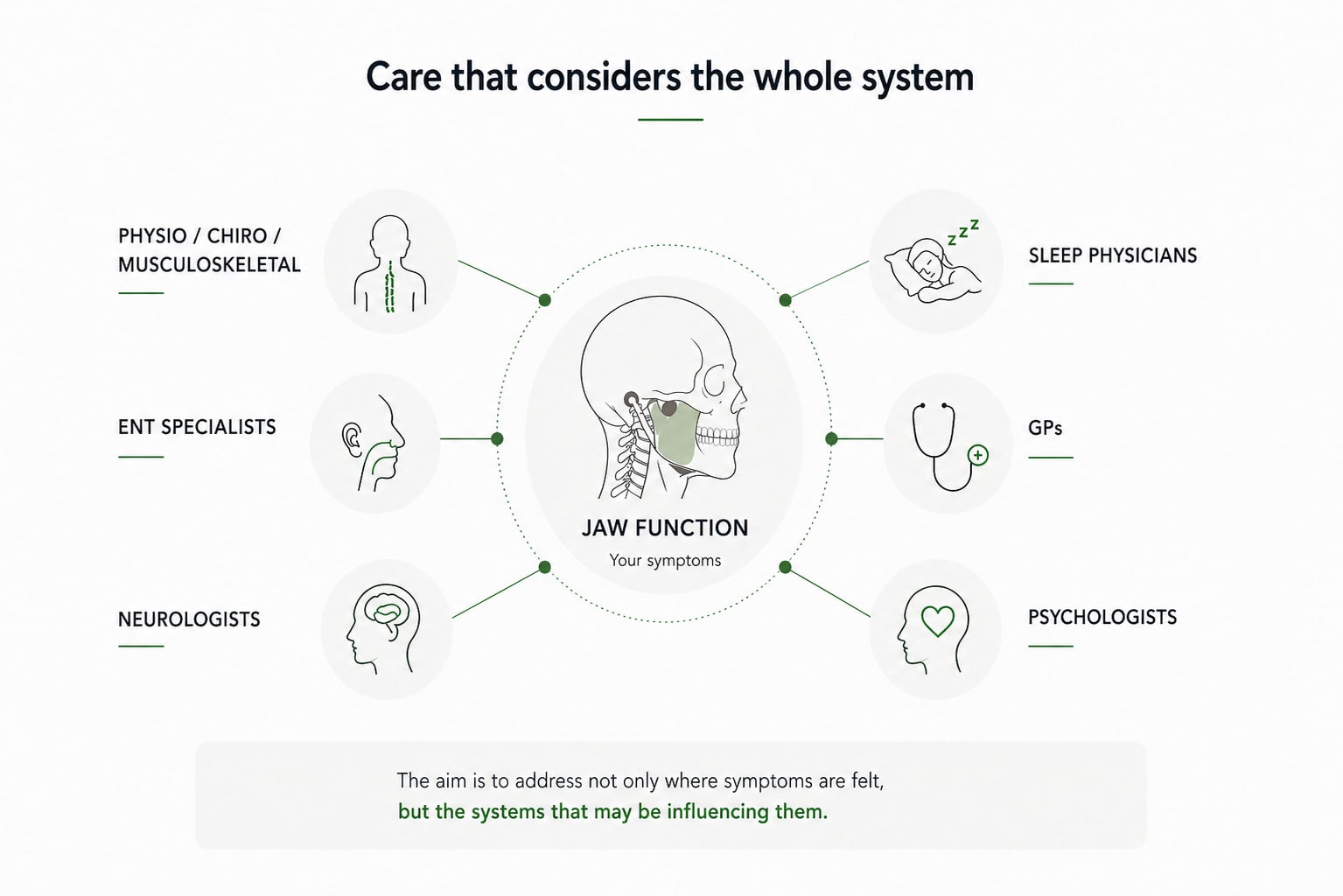
At TMJ Centre Melbourne, we do not treat “TMJ” as one single condition. Jaw pain, facial pain, headaches, ear symptoms, locking, clicking and muscle tightness can have different causes. Symptoms may come from the jaw joint, muscles, teeth, neck or headache system. They may also be referred from another area, or influenced by factors such as clenching, sleep disruption, stress, posture, medical conditions or persistent pain mechanisms.
This is why your first visit looks beyond where pain is felt. The aim is to form a clear clinical impression, explain what is most likely contributing to your symptoms, and guide the most appropriate next steps for your presentation.
Frequently asked questions
Common questions about a first visit
Do I need a referral?
No. You can book without a referral. If another practitioner has referred you, please bring any relevant letters, reports or notes.
Do I need scans before attending?
No. You do not need scans before your first visit unless you already have them. If imaging may be useful, your clinician will explain what type is appropriate and why.
Should I bring my current splint or night guard?
Yes. Please bring any current or previous splints, night guards or oral appliances so your clinician can review what has already been tried and how your jaw and bite are being supported.
Will I receive treatment on the first visit?
This depends on your assessment and clinical findings. Treatment can sometimes begin at the first visit if it is appropriate for your presentation. In other cases, further information, imaging or input from another practitioner may be needed before finalising a plan.
What if my symptoms are not caused by TMJ?
Can I attend if I have already seen other providers?
Yes. Many people attend after seeing other providers or trying previous care. Please bring any reports, treatment summaries, appliances or information that may help your clinician understand your history.
Will the clinic communicate with my dentist, GP or referring practitioner?
Where appropriate, we can provide a report to your dentist, GP, referring practitioner or other healthcare providers involved in your care. This can help support a coordinated approach when symptoms involve dental, jaw, muscle, neck, sleep, headache or medical factors.
What makes this assessment different?
The assessment is designed to identify the likely diagnosis, pain source and contributing factors, rather than simply treating the area where pain is felt.
This may include assessing the jaw joints, muscles, bite, neck, sleep, headaches, lifestyle factors and referred pain patterns. The aim is to match treatment to your presentation, rather than using the same approach for every patient.
Next step
Book an assessment with TMJ Centre Melbourne
A structured TMJ assessment can help identify the likely diagnosis, contributing factors and most appropriate next steps.