
Facial pain and tightness
Understanding facial muscle pain
Facial pain and tightness often come from overworked or strained muscles rather than the jaw joint itself. These muscles are used constantly for chewing, speaking, and expression, and can become fatigued or overloaded over time.
This type of discomfort is often described as a dull ache, pressure, or tightness across the face, particularly around the cheeks or temples.
Unlike joint-related pain, muscle pain may feel more diffuse and can change depending on use, tension, or fatigue.
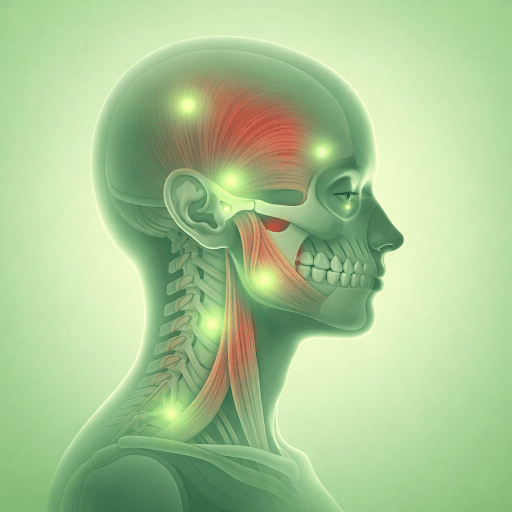
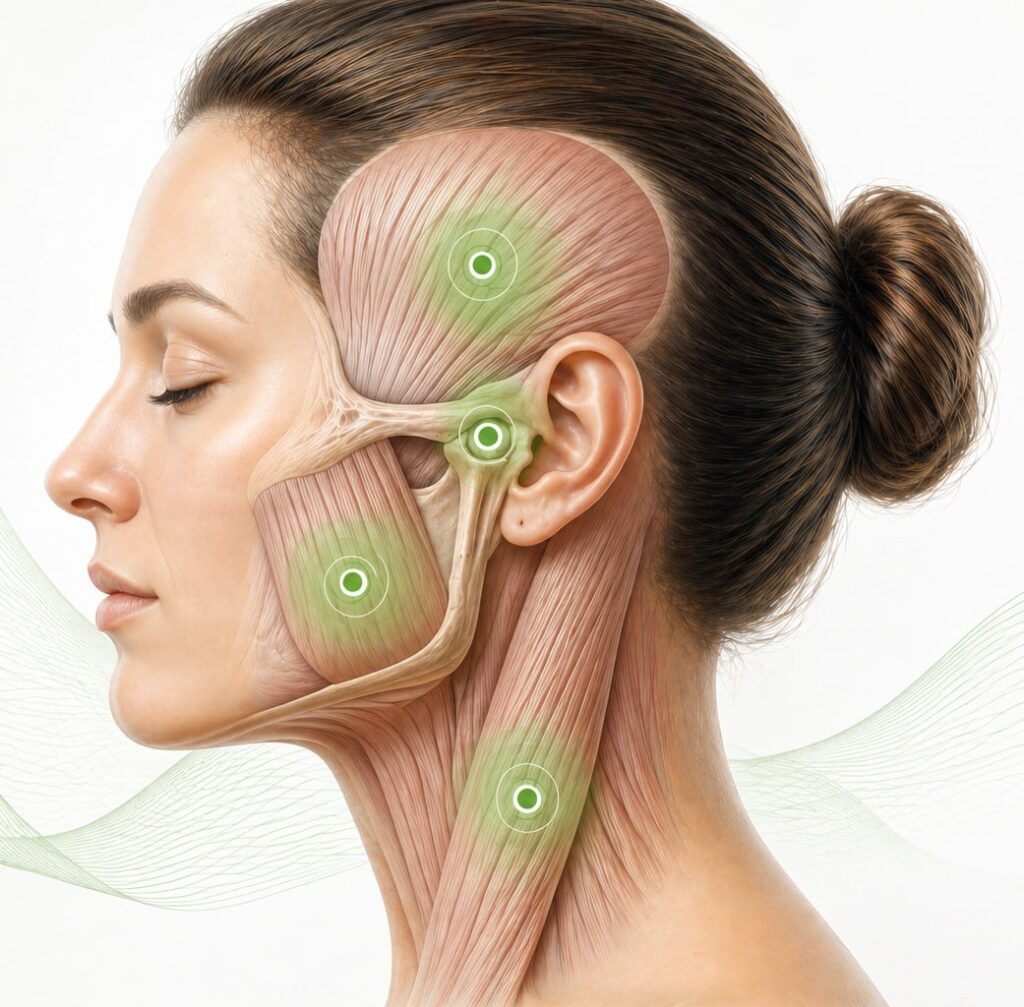
Where it hurts
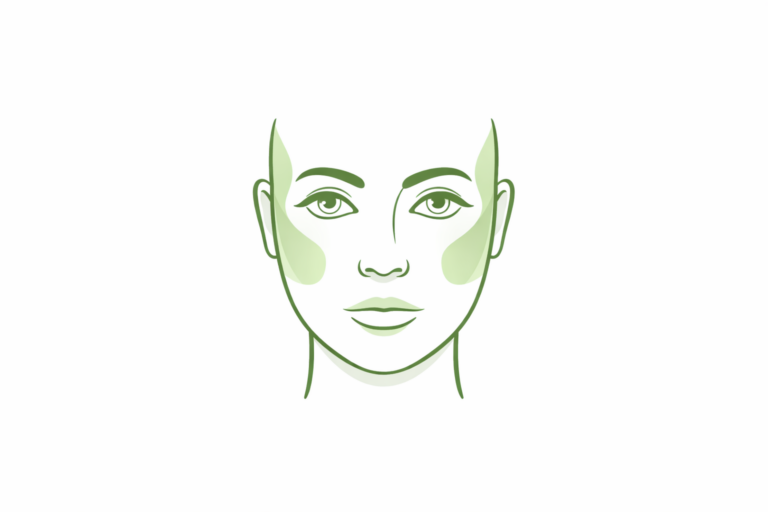
Pain can spread across the face and beyond
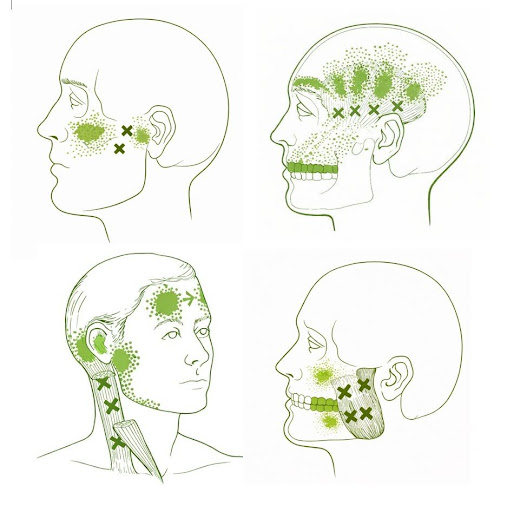
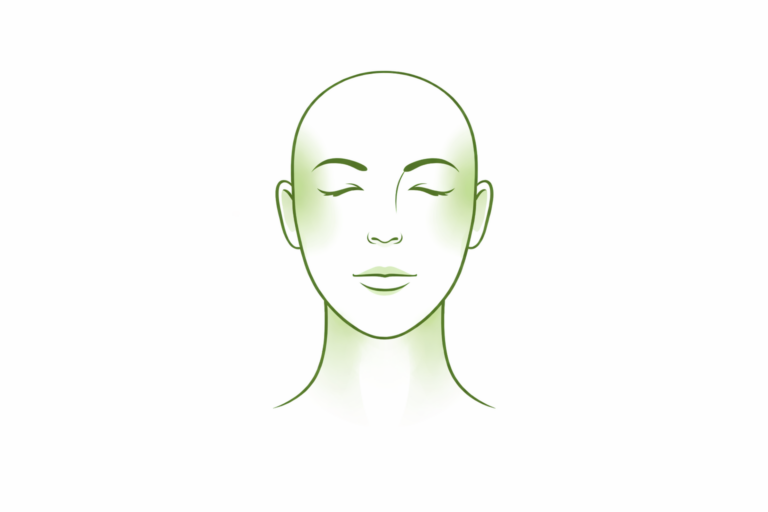
Areas where pain may be experienced
- Cheeks or jaw muscles
- Temples or sides of the head
- Around the eyes
- Along the jawline
- Into the neck or upper shoulders
Symptom patterns
Symptoms often occur together
Tight jaw muscles
Muscle fatigue
Jaw stiffness
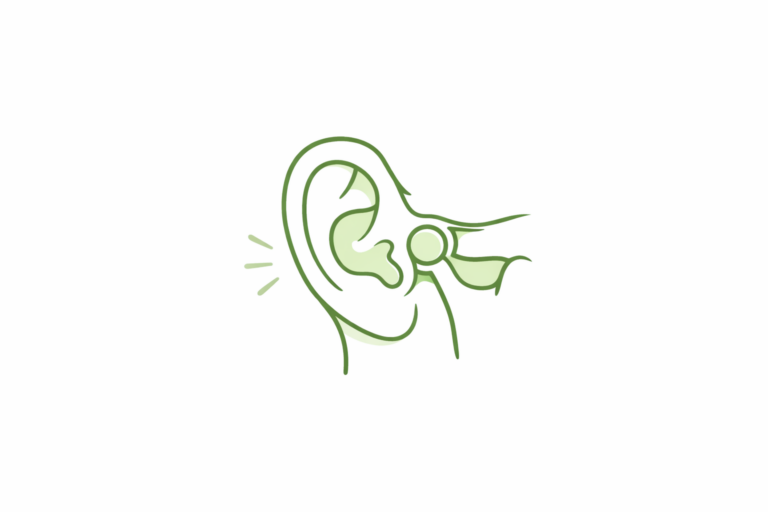
Referred pain
Similar symptoms can have different causes
Facial pain may come from muscle activity, joint function, or a combination of both. Muscle-related pain often feels broader and more variable than joint pain. Understanding whether symptoms are primarily muscle-driven helps guide how they are approached.
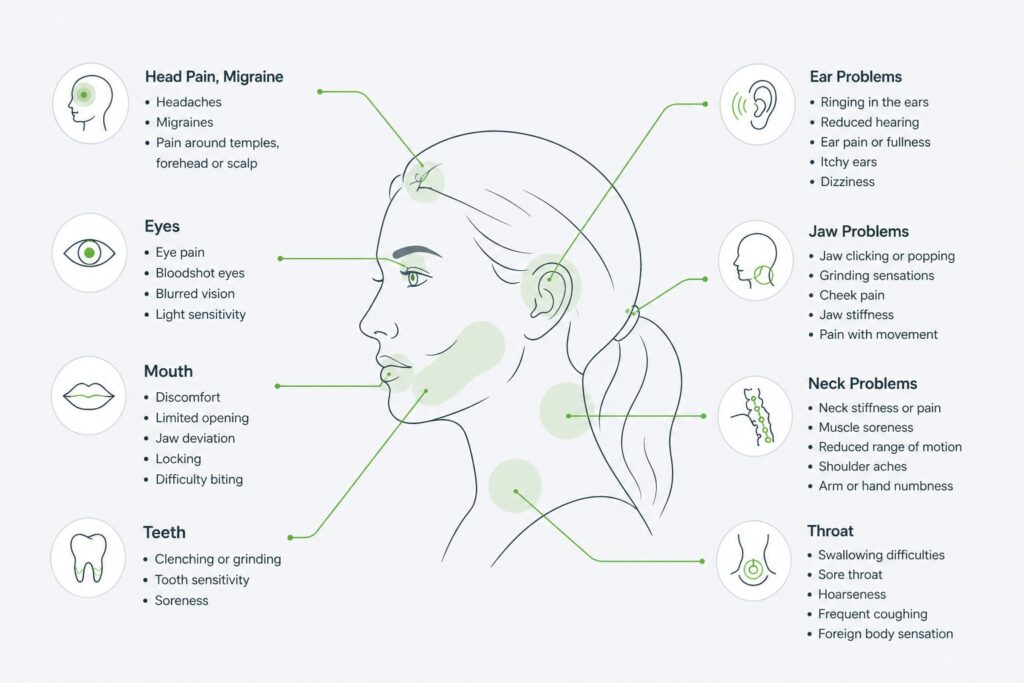
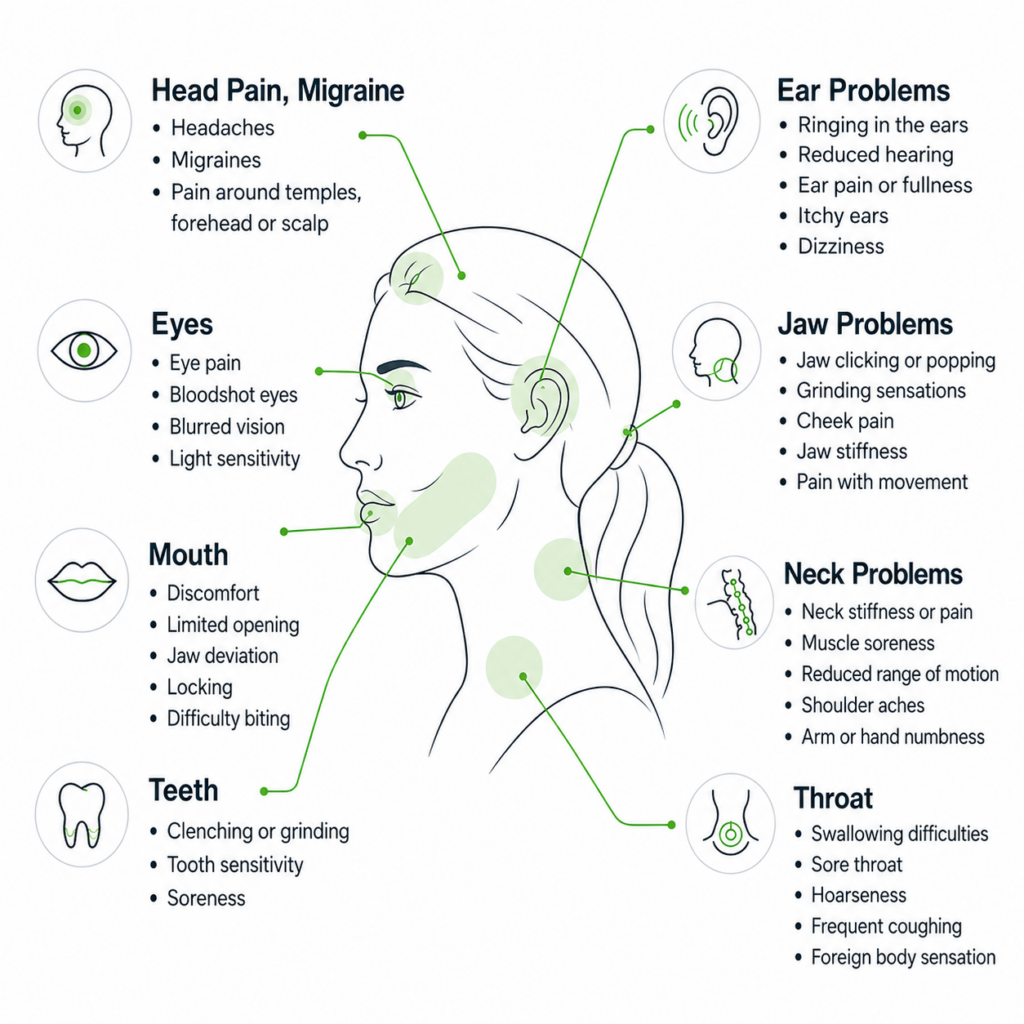
Whole-body connections
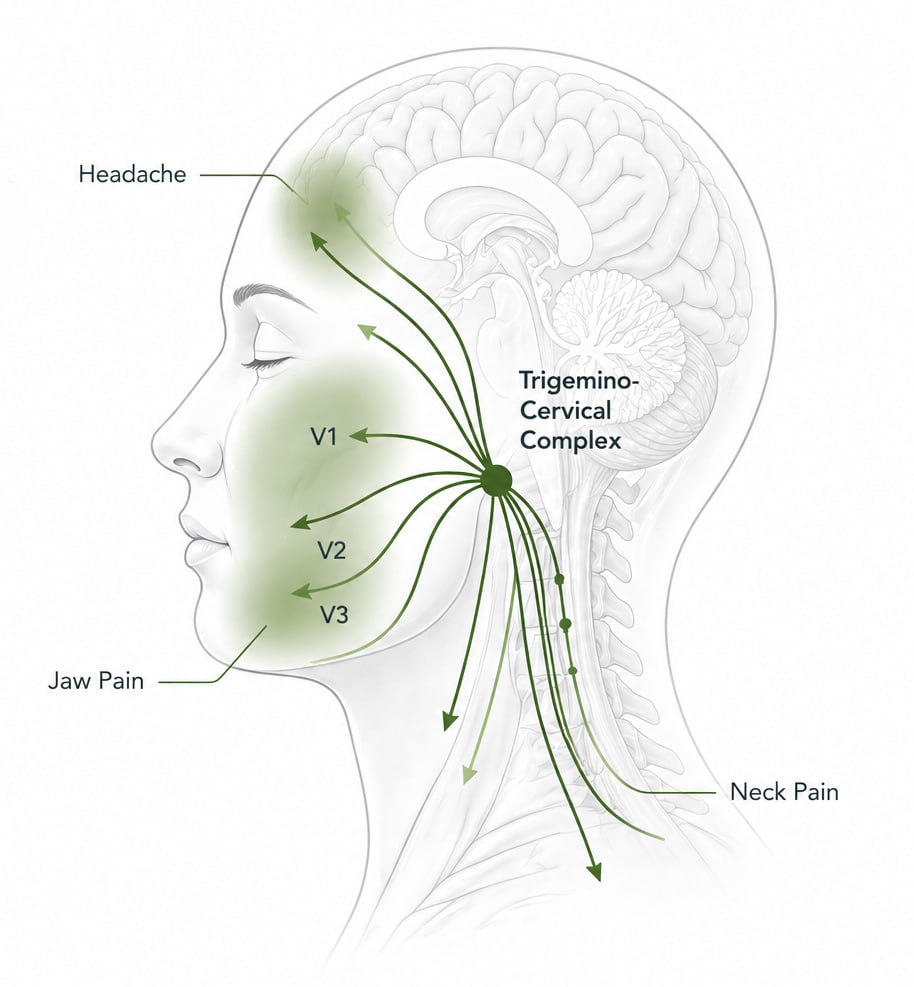
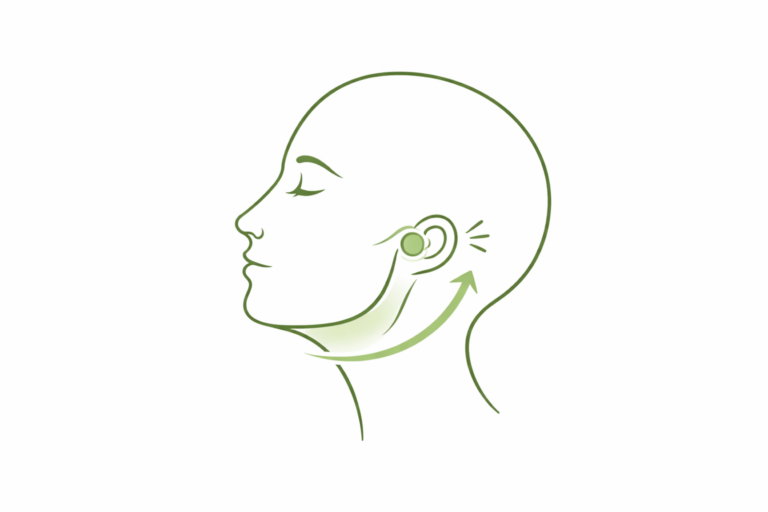
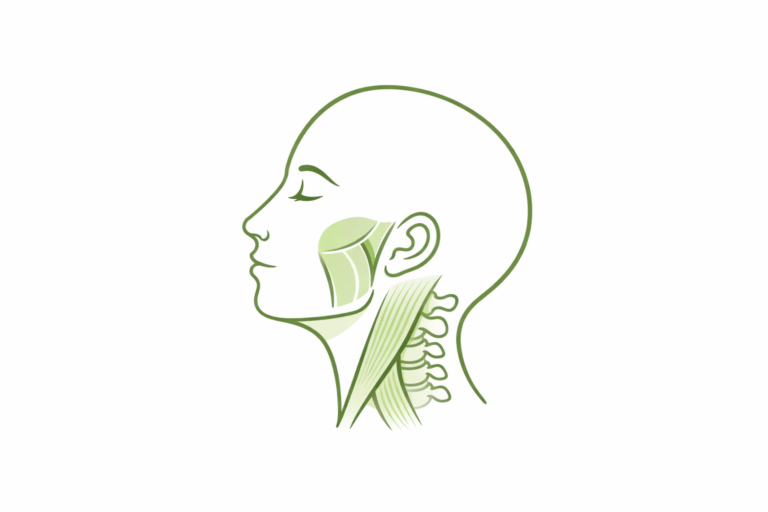
Muscles in the jaw and neck are closely linked
The muscles that control the jaw are closely connected to the neck and upper shoulder muscles. Changes in one area can influence the other.
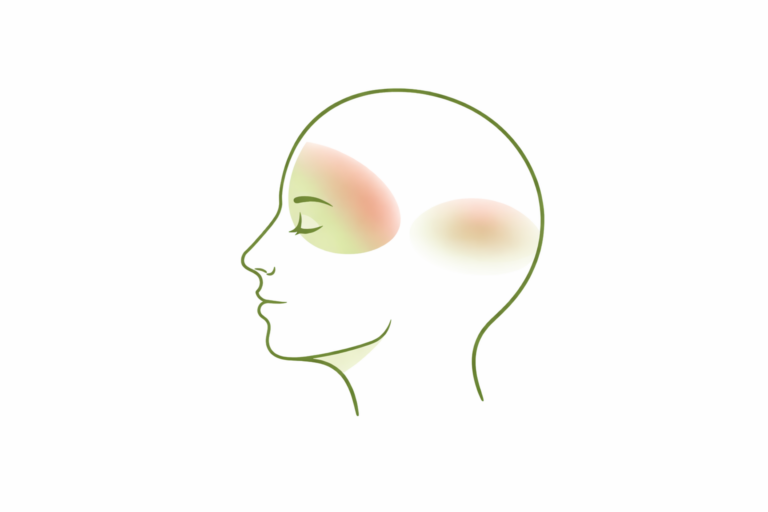
Muscle pain may also be referred from nearby areas. Trigger points — local areas of increased muscle tension — can produce pain felt in other regions.
For example:
- Jaw muscles may refer pain into the temples or teeth
- Neck and shoulder muscles may refer pain into the jaw or face
01
Muscle overload
02
Whole-body influences
03
Neck involvement
04
Trigger point referral
Why this can happen
Muscle pain is often related to how the jaw is used
Facial muscle pain usually develops when muscles are under ongoing strain or working inefficiently over time.
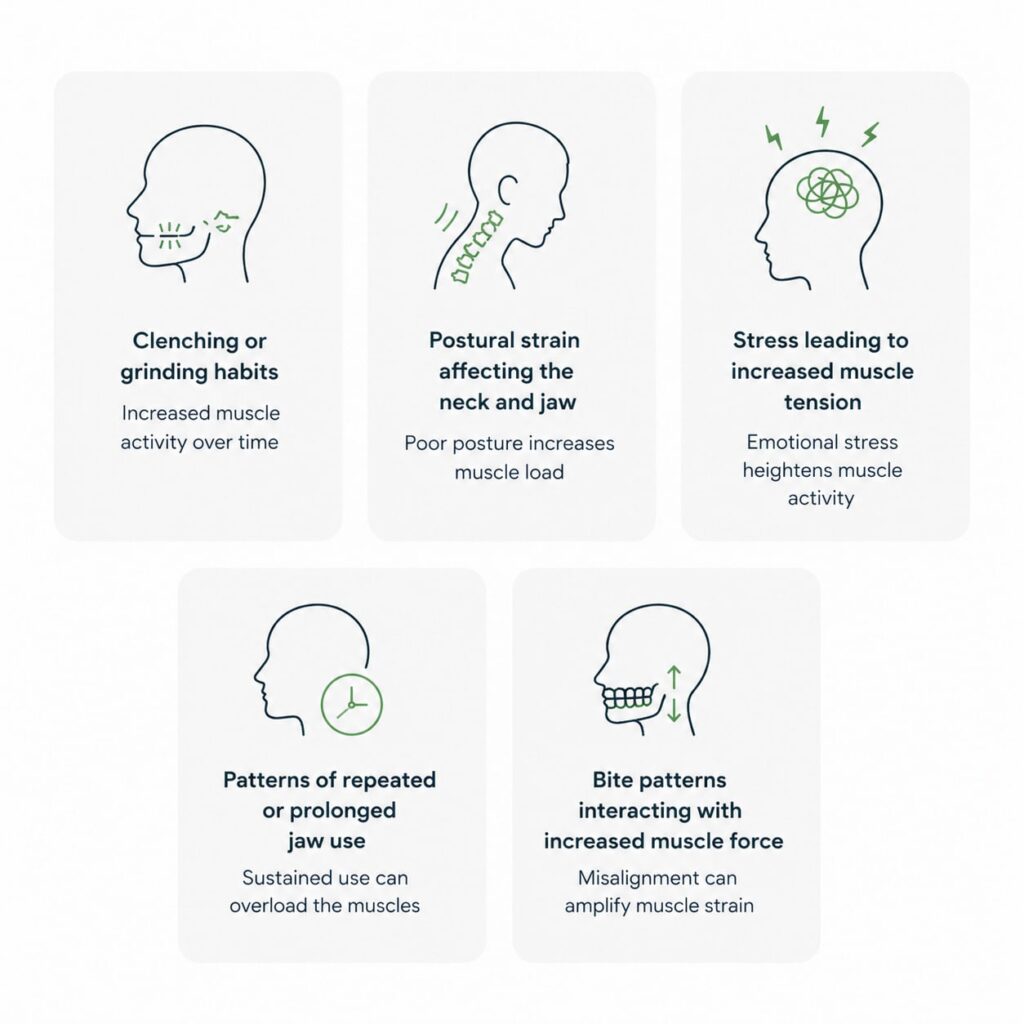
These contributing factors may include:
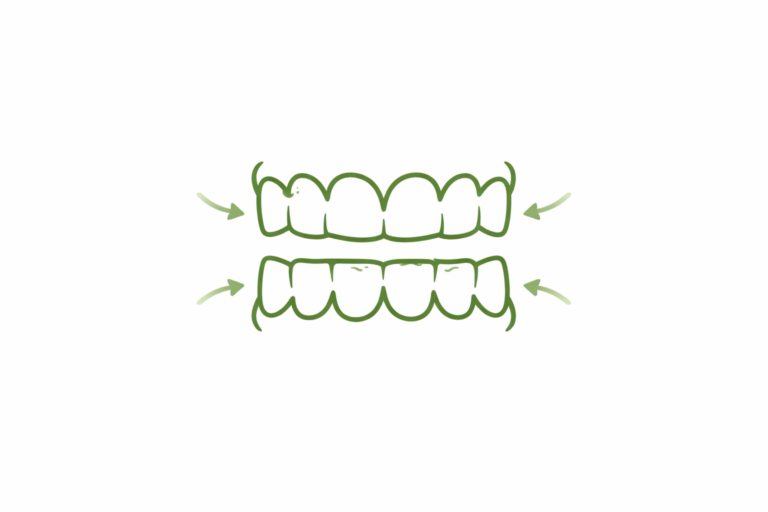
- clenching or grinding habits
- postural strain affecting the neck and jaw
- stress leading to increased muscle tension
- patterns of repeated or prolonged jaw use
- bite patterns interacting with increased muscle force
These factors often occur together, increasing the load on the muscles and making symptoms more persistent.

How symptoms change
Muscle pain can fluctuate
Facial muscle pain may vary depending on how the muscles are used and how much tension is present.
Changes may be influenced by:
- stress or emotional tension
- prolonged talking or chewing
- clenching or grinding
- sleep quality
- neck and postural factors
How we help
Care guided by your diagnosis
Facial muscle pain is influenced by how the jaw, muscles, and surrounding systems are functioning together.
Assessment focuses on:
- identifying patterns of muscle activity
- understanding how the jaw and neck interact
- recognising contributing habits and whole-body factors
Because of this, people with similar symptoms may require different TMJ treatment approaches.
Care may involve a combination of:
- orthotic support where appropriate
- muscle-focused therapies
- supportive treatments for muscle-related pain in selected cases
- addressing posture, habits, and contributing factors
In some adult cases, muscle relaxant injections may be considered where pain persists despite other approaches.
When to seek an assessment
Facial tightness or pain is persistent
Symptoms affect chewing or speaking
Pain spreads to the temples, head, or neck
Muscle fatigue or stiffness is ongoing
The cause of symptoms is unclear
Understanding what may be contributing to muscle pain can help guide appropriate next steps.
Treatment Options
Learn about TMJ treatment approaches
Our approach to TMJ care
Whole-body care guided by diagnosis
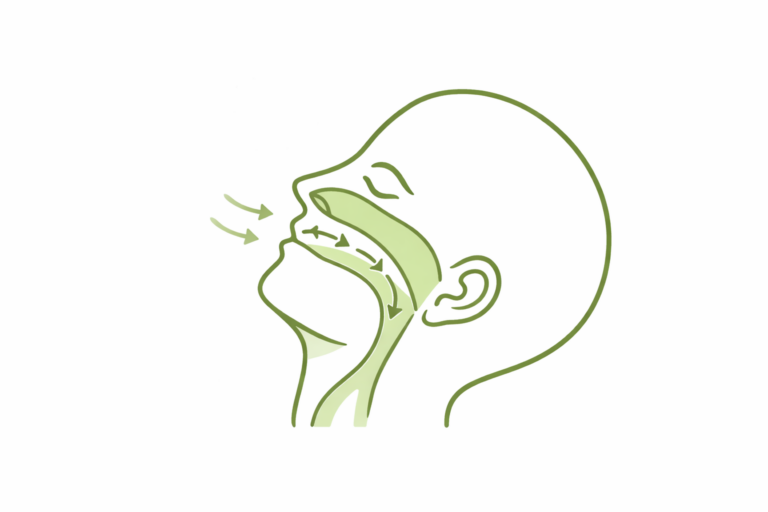
TMJ symptoms rarely come from the jaw alone. They can involve joint mechanics, muscle tension, bite function, posture, breathing, and sleep. At TMJ Centre Melbourne, care begins with understanding why symptoms are occurring. Treatment decisions follow diagnosis, not symptom labels. Care plans are personalised and often combine approaches, with progress reviewed and adjusted over time.
Diagnosis first
Whole-body assessment
Multidisciplinary care
Staged treatment
Evidence-Informed Care
We use recognised diagnostic frameworks and current literature to help guide assessment and treatment planning where relevant.