
Jaw locking, clicking and restricted opening
Understanding jaw locking and movement changes
Changes in the way your jaw moves can range from occasional clicking or popping through to difficulty opening your mouth or a jaw that becomes temporarily stuck.
While clicking without pain or restriction does not always require treatment, repeated locking, reduced opening or a jaw that becomes stuck open or closed should be assessed.
There are different reasons why a jaw can feel restricted or become locked. Understanding what is happening within the jaw joint and surrounding muscles is important before deciding whether treatment is needed.
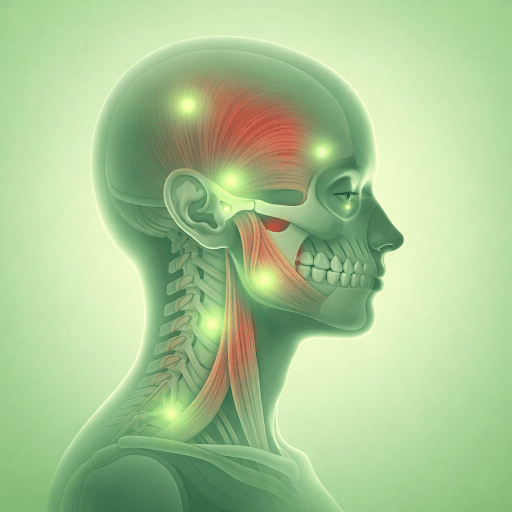
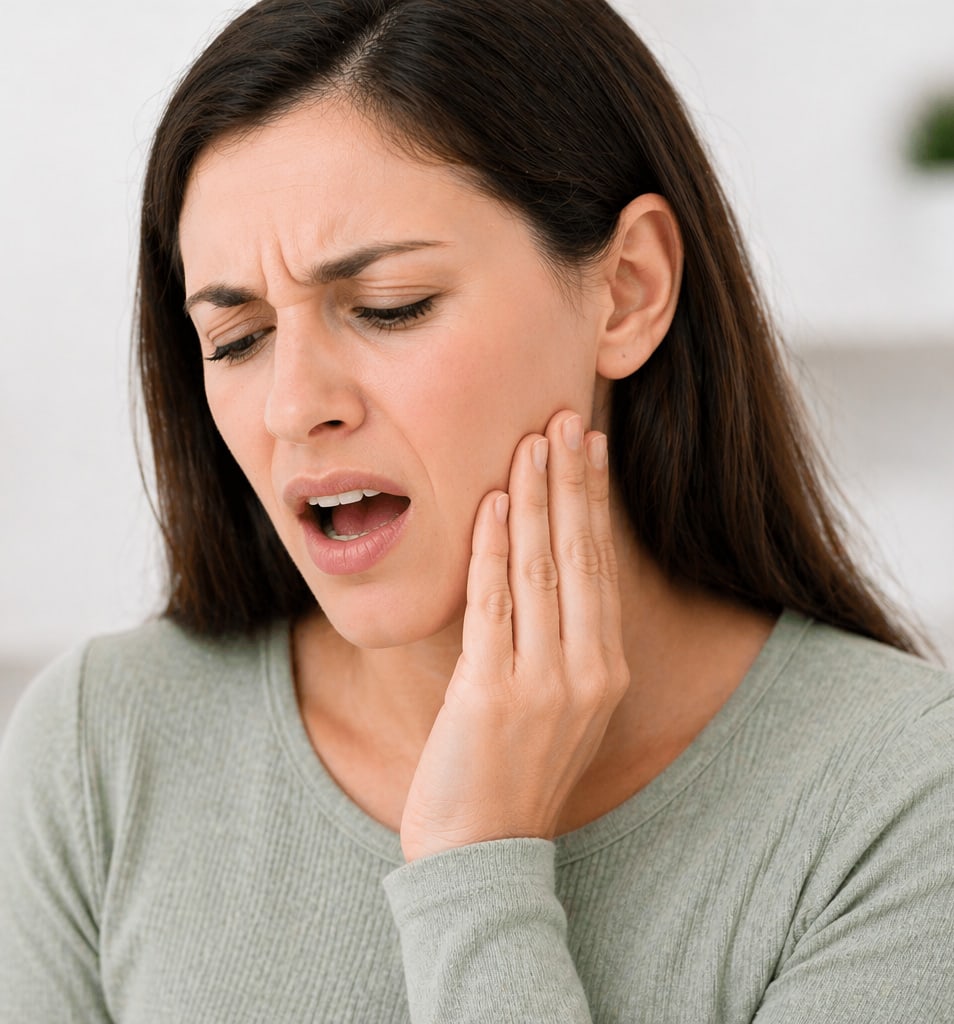
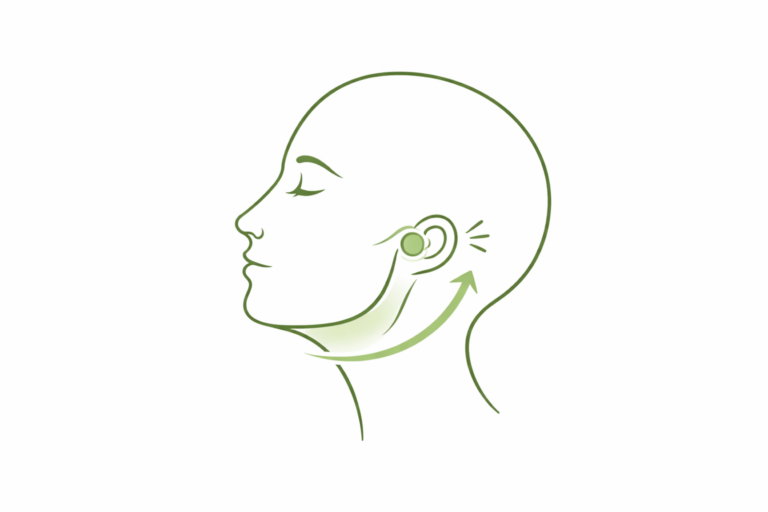
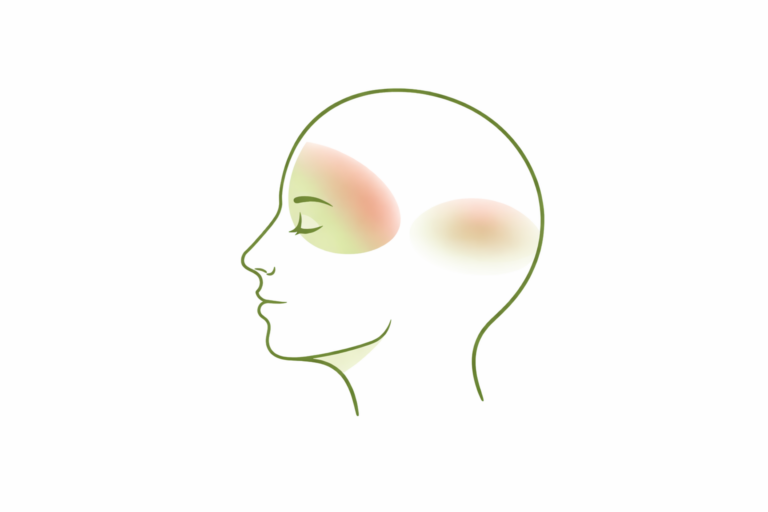
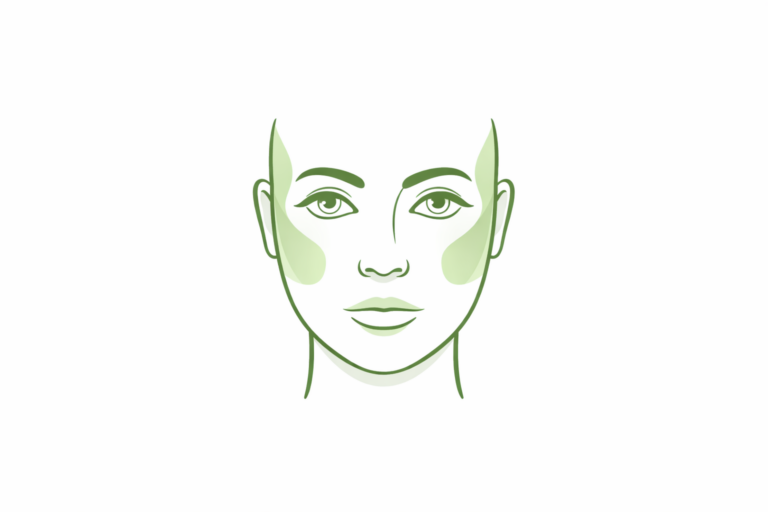
Where it shows up
Changes in movement can feel different for each person
Jaw movement problems do not always feel the same.
You may notice:
- Your jaw catches or temporarily gets stuck when opening or closing
- You cannot open your mouth as widely as usual
- Your jaw feels tight or restricted
- Your jaw becomes stuck open and you cannot close it
- Clicking or popping is accompanied by pain or changes in movement
- You need to move your jaw in a particular direction before it will open comfortably
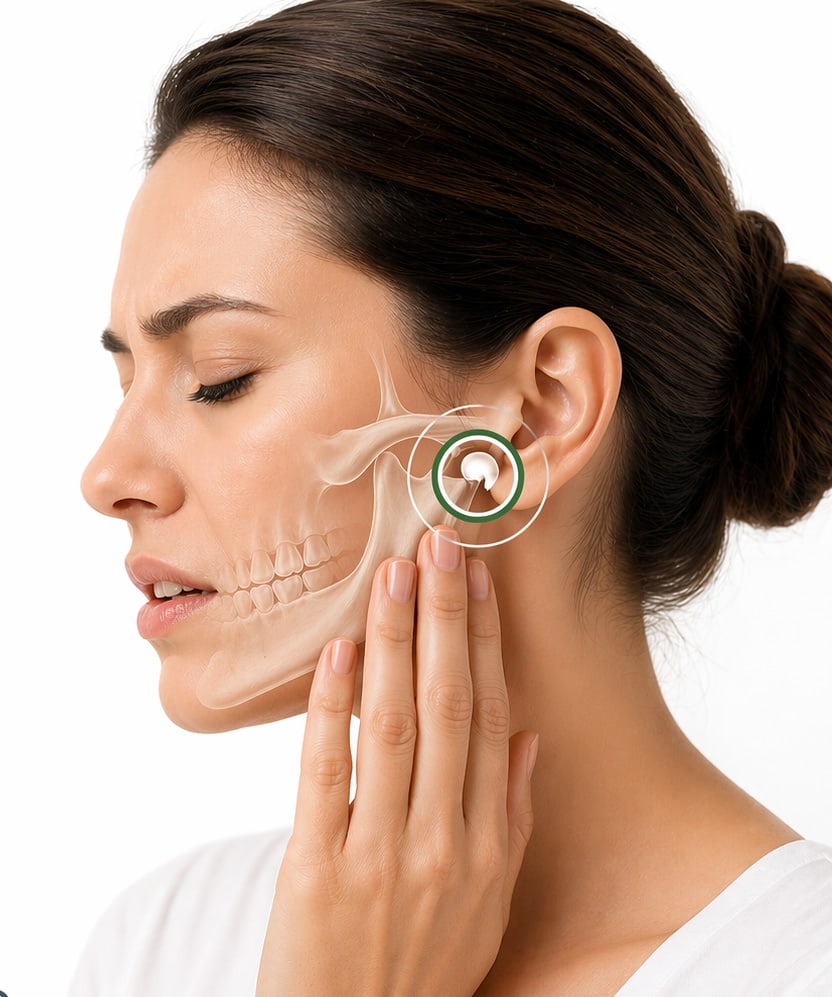
- Pain or pressure around the jaw joint when opening or closing your mouth
These symptoms can have different causes, which is why the way your jaw feels alone does not always tell us what is happening within the joint.
UNDERSTANDING THE DIFFERENCES
What does it mean when your jaw locks?
The jaw joint contains a small articular disc that helps the lower jaw move smoothly as you open and close your mouth.
Changes in the position or movement of this disc can sometimes contribute to catching, locking or restricted opening. However, not every jaw that feels “locked” is caused by a displaced disc.
Closed lock
A true closed lock occurs when the articular disc within the jaw joint is displaced and does not return to its usual position during opening. This can restrict the forward movement of the lower jaw and limit how widely you can open your mouth.
Restricted opening or a “soft lock”
Limited opening may also occur due to muscle guarding or spasm, muscle pain, joint inflammation, prolonged mouth opening, trauma or other underlying conditions. For this reason, limited opening alone does not confirm a true closed lock.
Open lock
An open lock occurs when the jaw becomes stuck open and cannot close normally. A brief episode that releases by itself may represent a subluxation. If the jaw remains stuck open, this may represent a dislocation and requires urgent professional care.
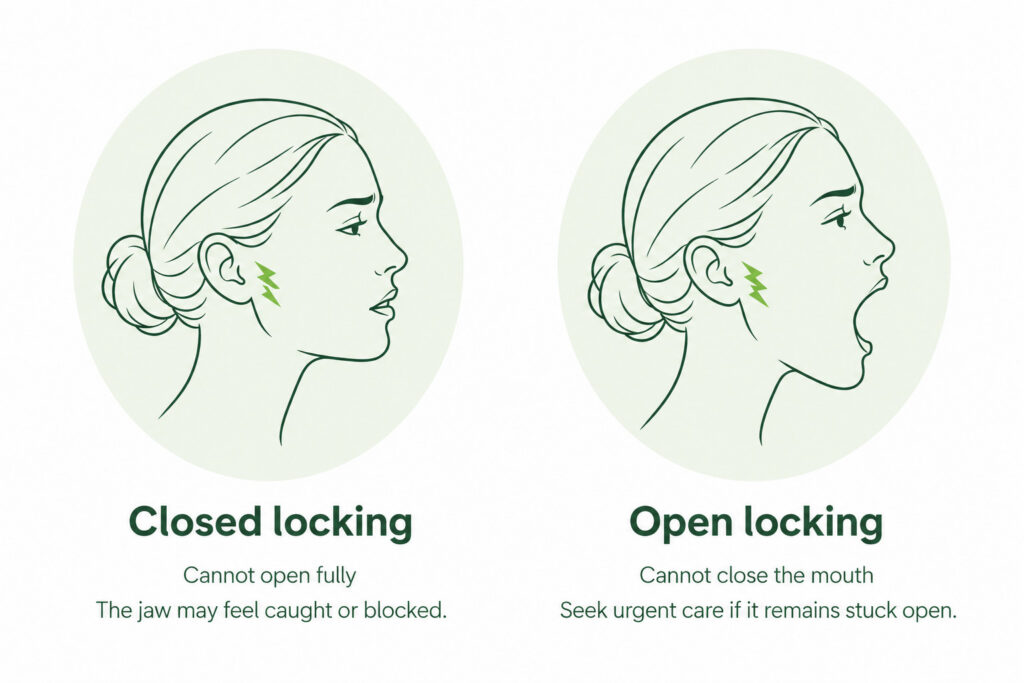
Is your jaw locked right now?
If your jaw is locked closed
Try heat and rest, and avoid forcing the jaw open. If it does not resolve, contact our clinic for advice and assessment.
If your jaw is stuck open
Try heat and rest, and do not force the jaw closed. If it does not resolve, seek urgent medical attention.
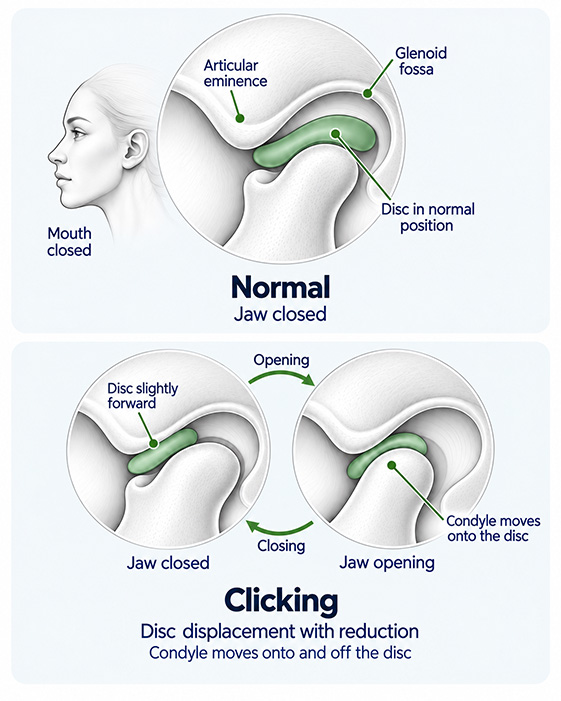
What if my jaw clicks but doesn’t lock?
Clicking, popping or cracking
Clicking, popping or cracking sounds can occur when you open or close your mouth.
If clicking occurs without pain, catching or restricted movement, it may not require treatment. An assessment may be appropriate if clicking:
- Becomes painful
- Is accompanied by catching or locking
- Occurs with reduced mouth opening
- Becomes more frequent or changes noticeably
- Makes eating, speaking or opening your mouth uncomfortable
What about grinding or crunchy jaw noises?
A rough, grating or crunchy sound during jaw movement is called crepitus. It can occur with changes to the joint surfaces, including osteoarthritis. The sound alone does not establish a diagnosis or mean that treatment is needed. When assessing crepitus, we also consider symptoms such as pain, stiffness, changes in your bite and difficulty opening or chewing.
For a more detailed explanation, read
Why is my jaw clicking, popping, or cracking?
Why symptoms change
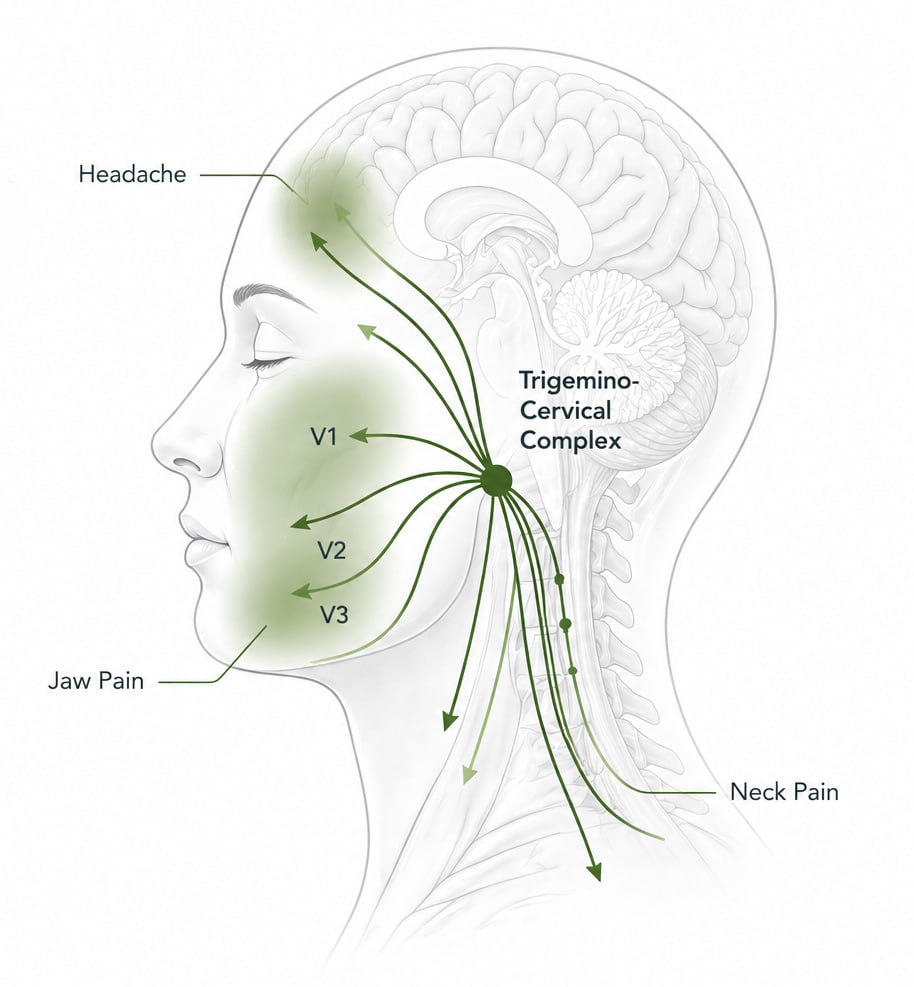
The jaw doesn’t work in isolation
The jaw does not work in isolation. Comfortable opening and closing depends on the coordination of the jaw joints, discs and surrounding muscles.
Neck pain, muscle tension and postural factors may also be relevant for some patients and can be considered as part of the overall assessment where appropriate.
01
Joint and disc movement
Changes in the way the disc and joint move together can contribute to clicking, catching, locking or restricted movement.
02
Muscle tension and guarding
Jaw muscles can tighten or guard in response to pain or irritation, making opening feel restricted without a mechanical joint lock.
03
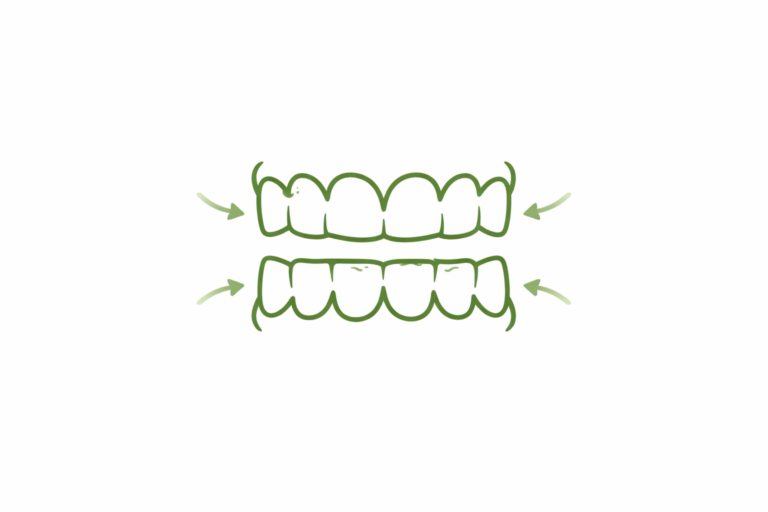
Clenching and grinding
Repeated or sustained loading of the jaw may contribute to muscle fatigue, soreness or irritation around the joint.
04
Prolonged jaw use
Long periods of chewing, talking or holding the mouth open may aggravate symptoms in some people.
How symptoms change
Movement patterns can vary over time
Jaw symptoms are not always consistent. You may find that your jaw moves normally most of the time but becomes tighter, more painful or more restricted during certain periods.
Symptoms may change alongside:
- Clenching or grinding
- Stress and muscle tension
- Prolonged talking or chewing
- Sleep quality
- Neck pain or tension
- Changes in jaw loading or movement
A change in symptoms does not necessarily tell us the cause. Looking at the pattern over time can help build a clearer picture of what may be contributing.
How we help
Care guided by your diagnosis
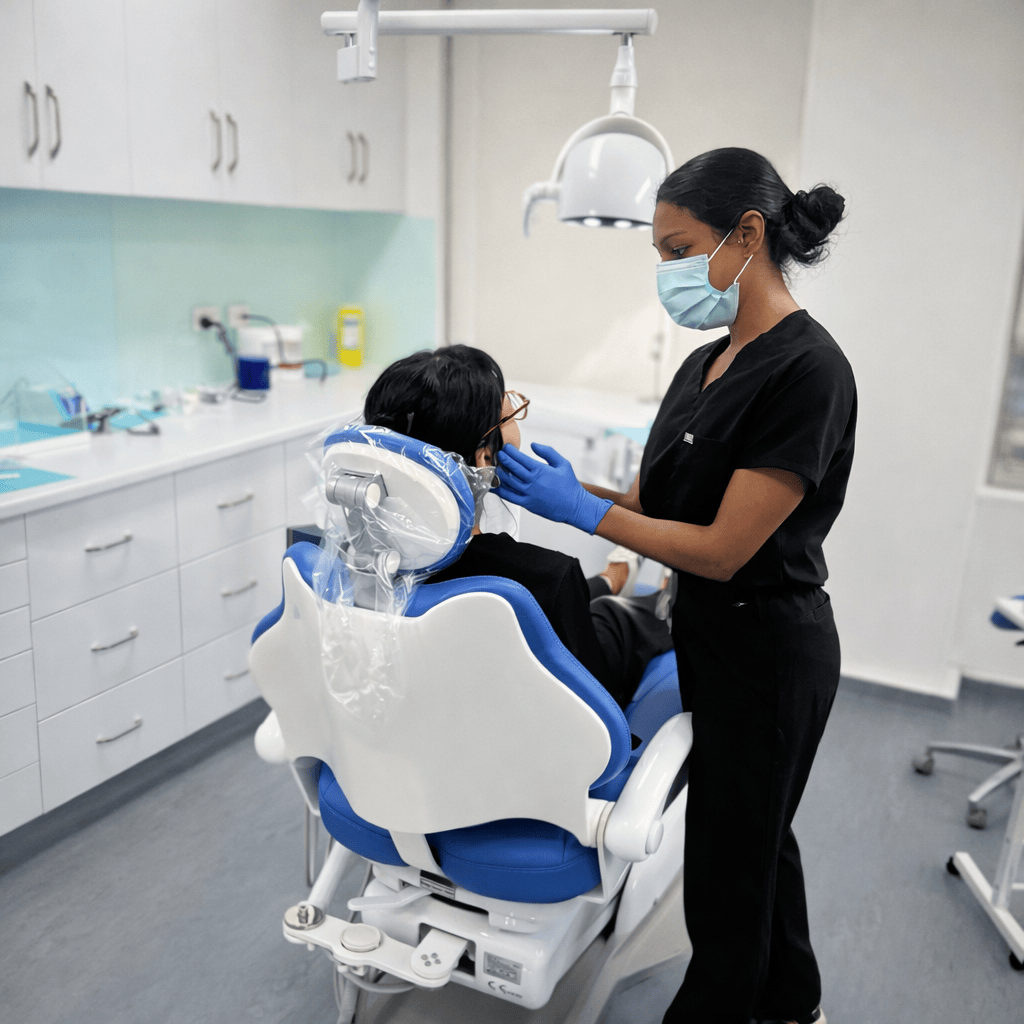
Your assessment includes a detailed history and physical examination to understand what you are experiencing and what factors may be contributing.
Depending on your presentation, we may consider:
- Jaw joint movement and mechanics
- Muscle activity, pain and coordination
- Bite function and jaw loading
- Clenching, grinding and other habits
- Sleep, stress, posture and lifestyle factors
- Neck or other musculoskeletal factors where relevant
This helps distinguish between different causes of restricted movement and determine whether treatment, monitoring or referral for further investigation is appropriate.
TMJ Treatment is guided by your diagnosis and may include education, targeted therapies and collaboration with other practitioners where appropriate.
When to seek an assessment
Your jaw repeatedly catches or locks
You cannot open your mouth as widely as usual
The jaw locks open or closed
Clicking is painful or makes daily activities difficult
Symptoms are worsening or becoming more frequent
If jaw clicking, pain or restricted movement is affecting you, an assessment can help clarify what may be contributing
Treatment Options
Learn about TMJ treatment approaches
Our approach to TMJ care
Whole-body care guided by diagnosis
TMJ symptoms rarely come from the jaw alone. They can involve joint mechanics, muscle tension, bite function, posture, breathing, and sleep. At TMJ Centre Melbourne, care begins with understanding why symptoms are occurring. Treatment decisions follow diagnosis, not symptom labels. Care plans are personalised and often combine approaches, with progress reviewed and adjusted over time.
Diagnosis first
Whole-body assessment
Multidisciplinary care
Staged treatment
Evidence-Informed Care
We use recognised diagnostic frameworks and current literature to help guide assessment and treatment planning where relevant.