
TMJ ear pain and related symptoms
TMJ ear pain
Ear pain, pressure, fullness or ringing can sometimes occur alongside temporomandibular disorders (TMD), which affect the TMJ and chewing muscles.
When pain comes from the jaw joint or chewing muscles, it can be felt in or around the ear because these areas share sensory pathways. This is called referred pain. Some people notice jaw and ear pain together, particularly with chewing or clenching.
Ear fullness and tinnitus can occur with TMD, but their relationship with the jaw is less certain. Ear symptoms still need other causes considered.
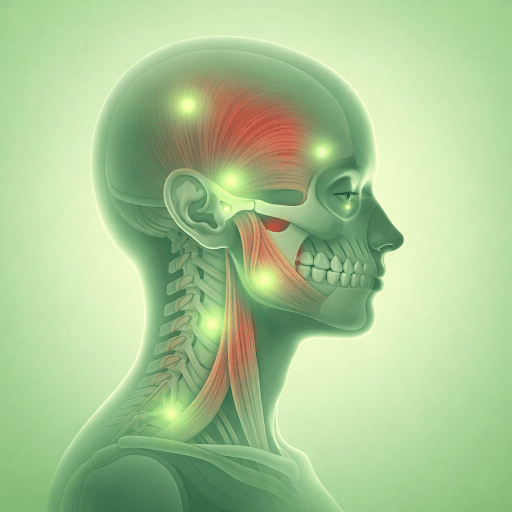
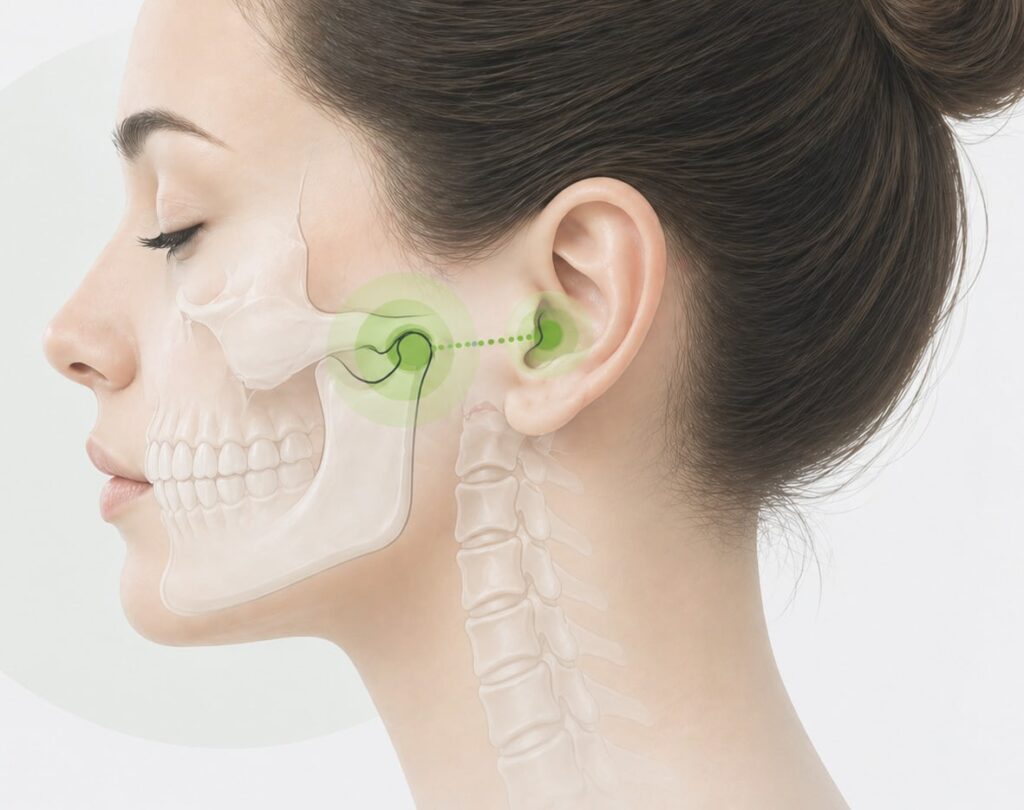
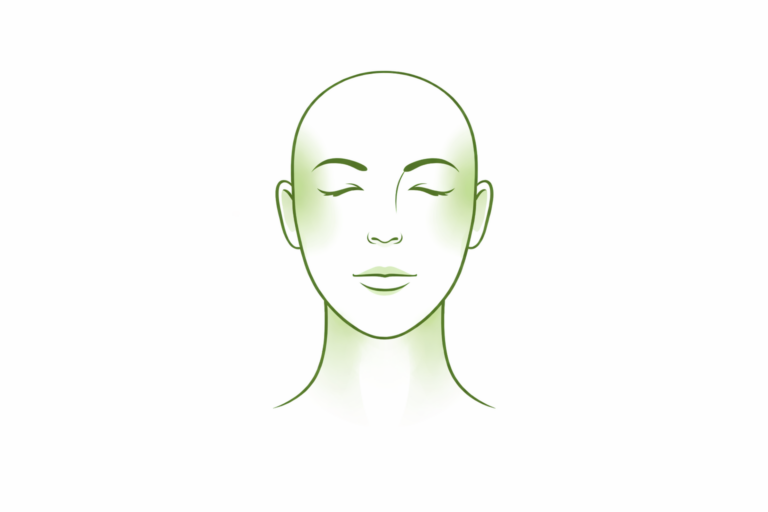
Where it shows up
How TMJ ear pain can feel day to day
TMJ-related ear discomfort can feel similar to an earache even when the source is the jaw muscles.
Common experiences include
- Ear pain or soreness
- Pressure or fullness in the ear
- Ringing or changes in sound perception
- Ear pain that changes with chewing or jaw movement
Because these symptoms can also come from the ear, teeth, throat or other structures, the overall pattern matters during assessment.
Symptom patterns
Jaw and ear pain
Jaw and ear pain often occurs with other clues that can help determine whether the jaw may be contributing.
Ear and jaw pain together
Familiar pain around the ear and jaw joint
Muscle tightness
Tenderness or tension in the jaw, face or neck
Movement-related symptoms
Ear pain that worsens with chewing, yawning or talking
Head or facial discomfort
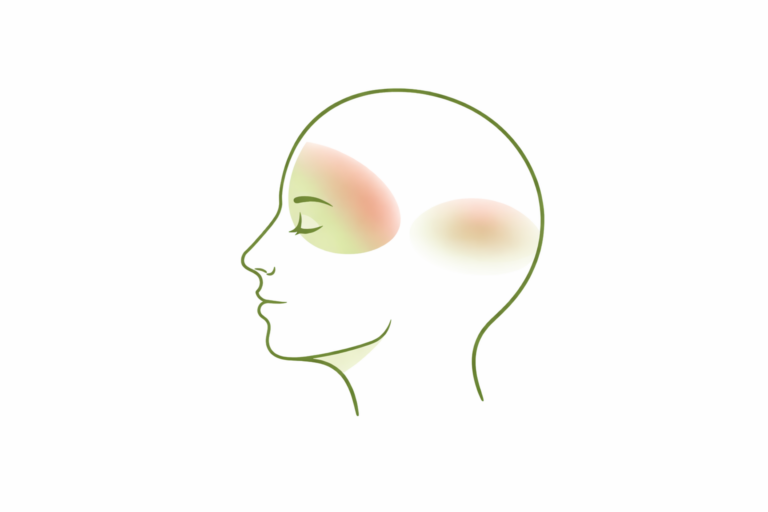
Pain extending into the temples or sides of the face
Similar symptoms can have different causes
An earache does not automatically mean the problem is inside the ear, but a normal ear examination does not automatically mean the jaw is the cause either. We consider the pattern, jaw examination and GP, audiology or ENT findings to decide whether TMD is contributing.
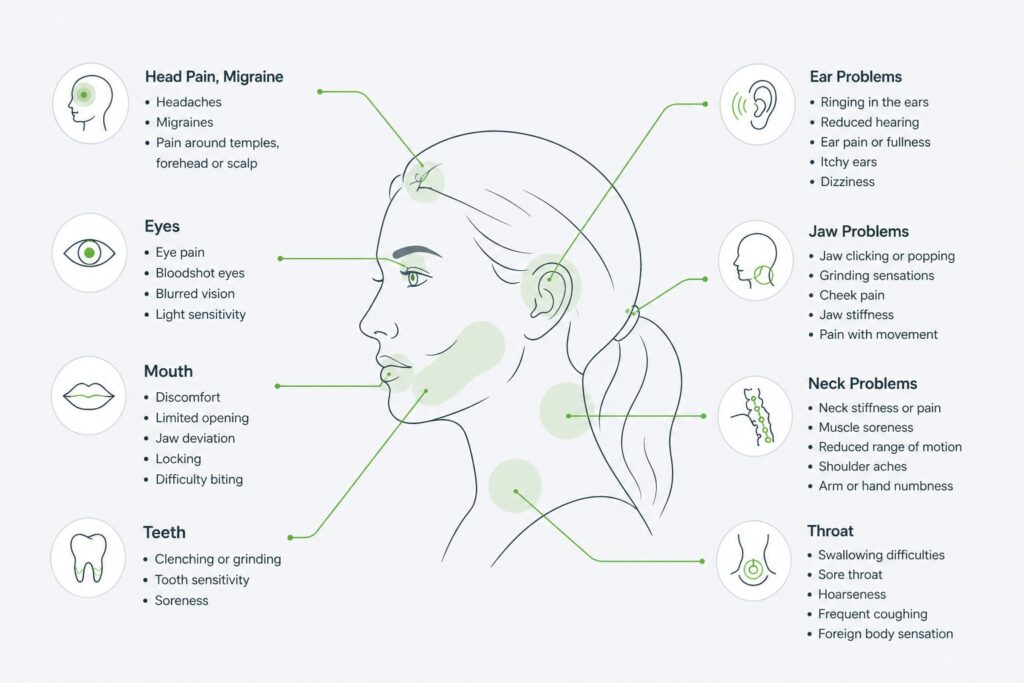
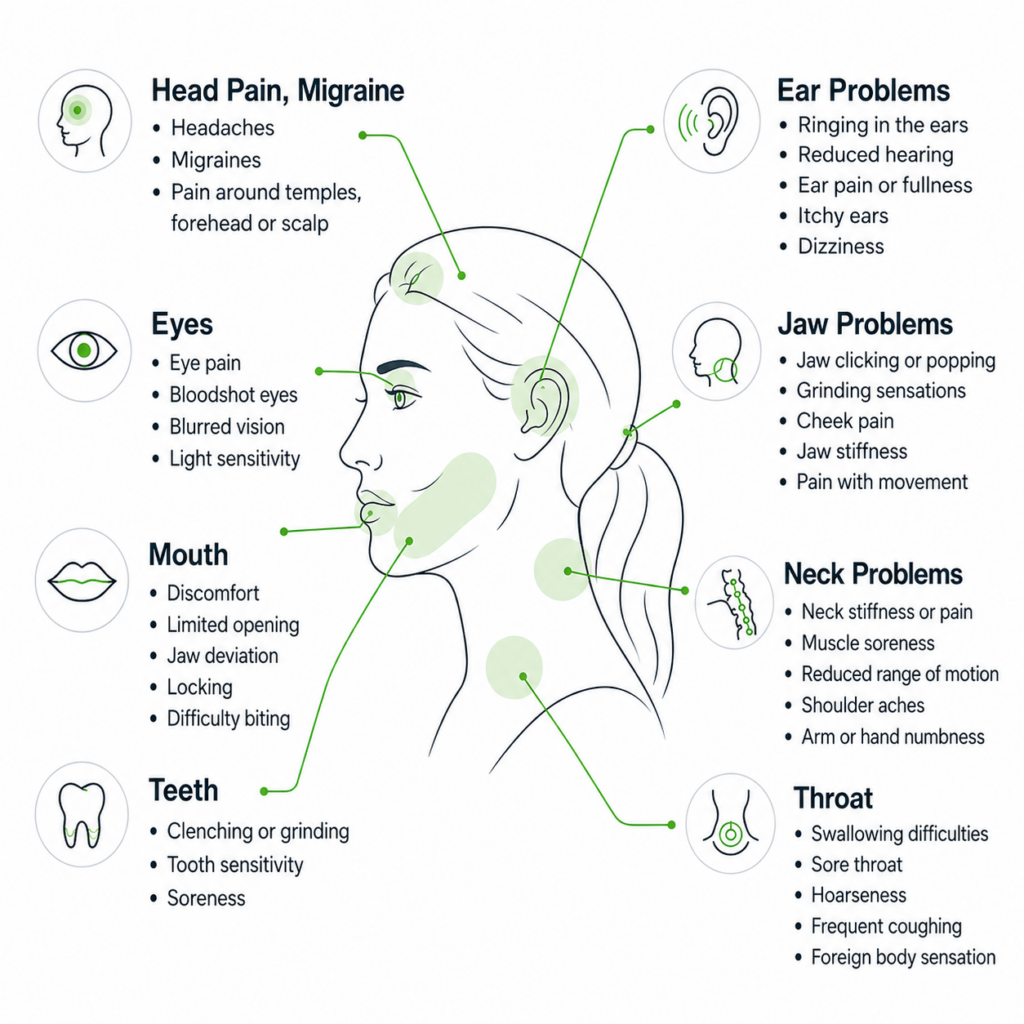
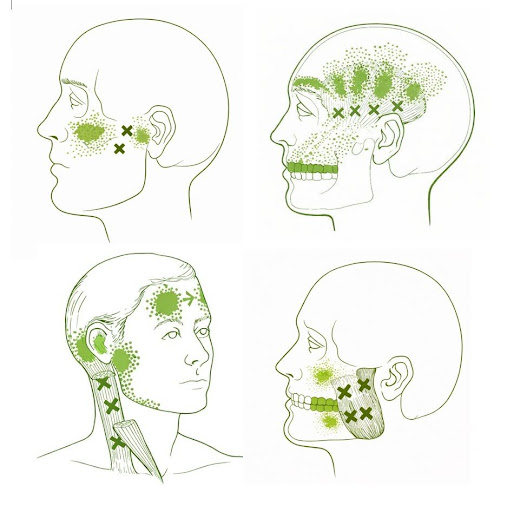
Whole-body connections
Why jaw pain may mimic an earache
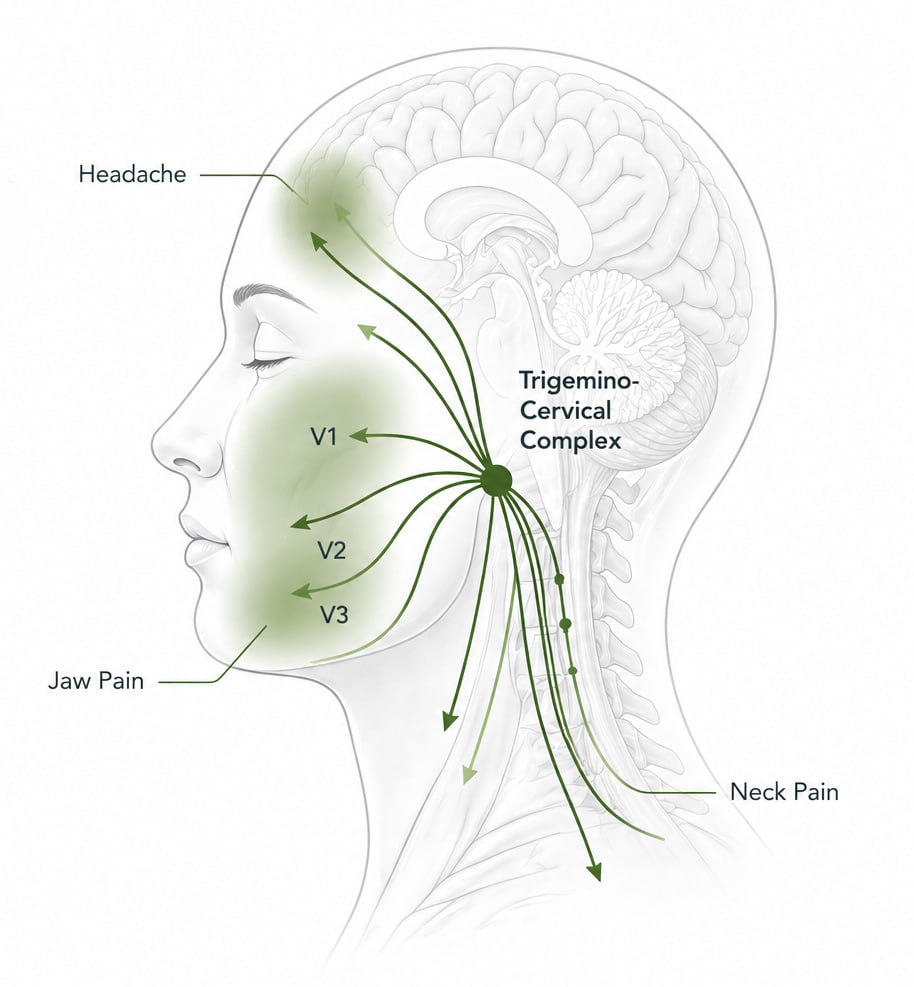
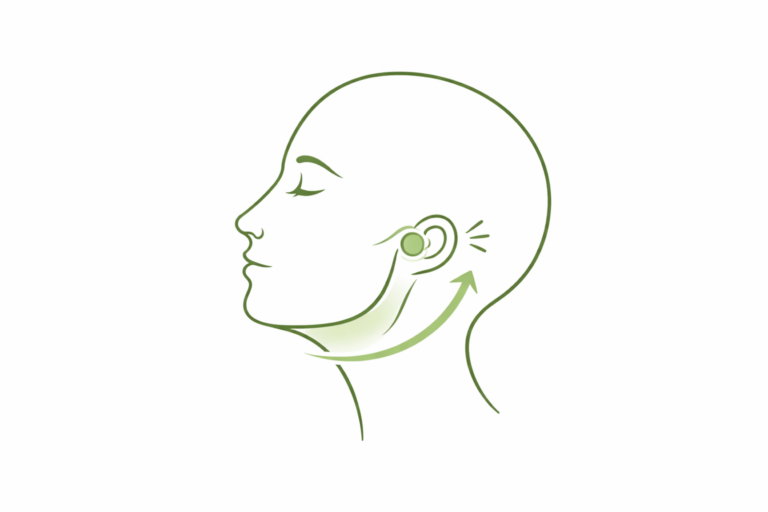
Ear pain does not always start in the ear. Sensory information from the TMJ, chewing muscles and other nearby structures enters overlapping nerve pathways, so pain from one area can sometimes be felt in another.
This is referred pain, and it helps explain why a painful TMD can feel like an earache or pain just in front of, below or around the ear.
During a TMJ assessment, an important finding is whether palpation or jaw movement reproduces the ear pain you normally recognise as your symptom. Reproducing familiar pain is more useful than simply finding a tender muscle.
01
Joint proximity
The TMJ lies directly in front of the ear
02
Referred Pain
Joint or chewing-muscle pain may be felt as ear pain
03
Muscle activity
Chewing or clenching during normal daily activities may aggravate a painful TMD
04
Nerve connections
Overlapping sensory pathways can contribute to referred ear pain
Why this can happen
What suggests ear pain may be linked to your jaw
A jaw contribution is more likely when the overall history and examination findings point in the same direction.
Features may include:
- ear pain aggravated by chewing, yawning or talking
- jaw pain occurring at the same time
- your familiar ear pain reproduced during jaw examination
- ear and jaw symptoms worsening and settling together
- a normal ear assessment
Ear fullness or tinnitus can coexist with TMD, but these symptoms need separate consideration.

How symptoms change
Ear pain can change over time
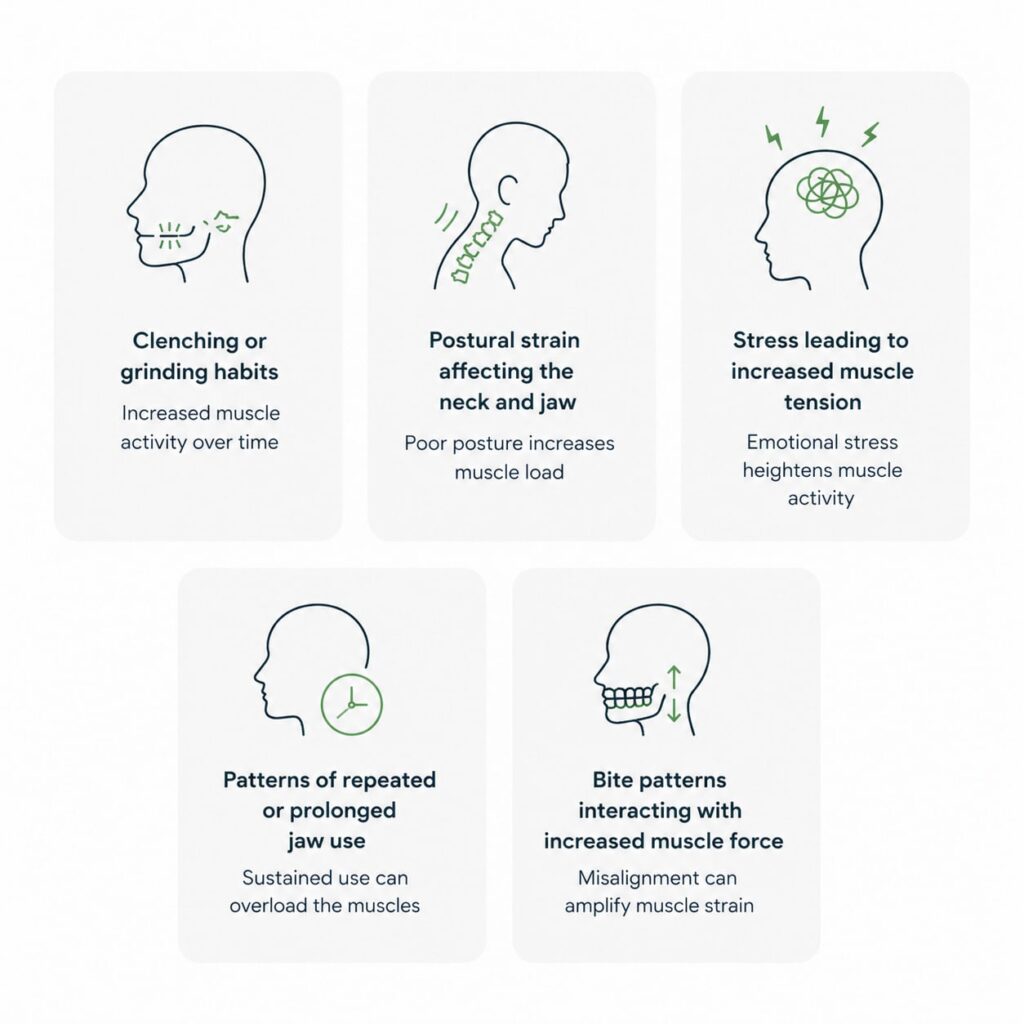
Jaw-related ear pain can change as jaw pain and loading change.
You may notice symptoms vary with:
- chewing, yawning or prolonged talking
- clenching or grinding
- periods of increased jaw pain
- morning jaw tightness
- associated neck pain
How we help
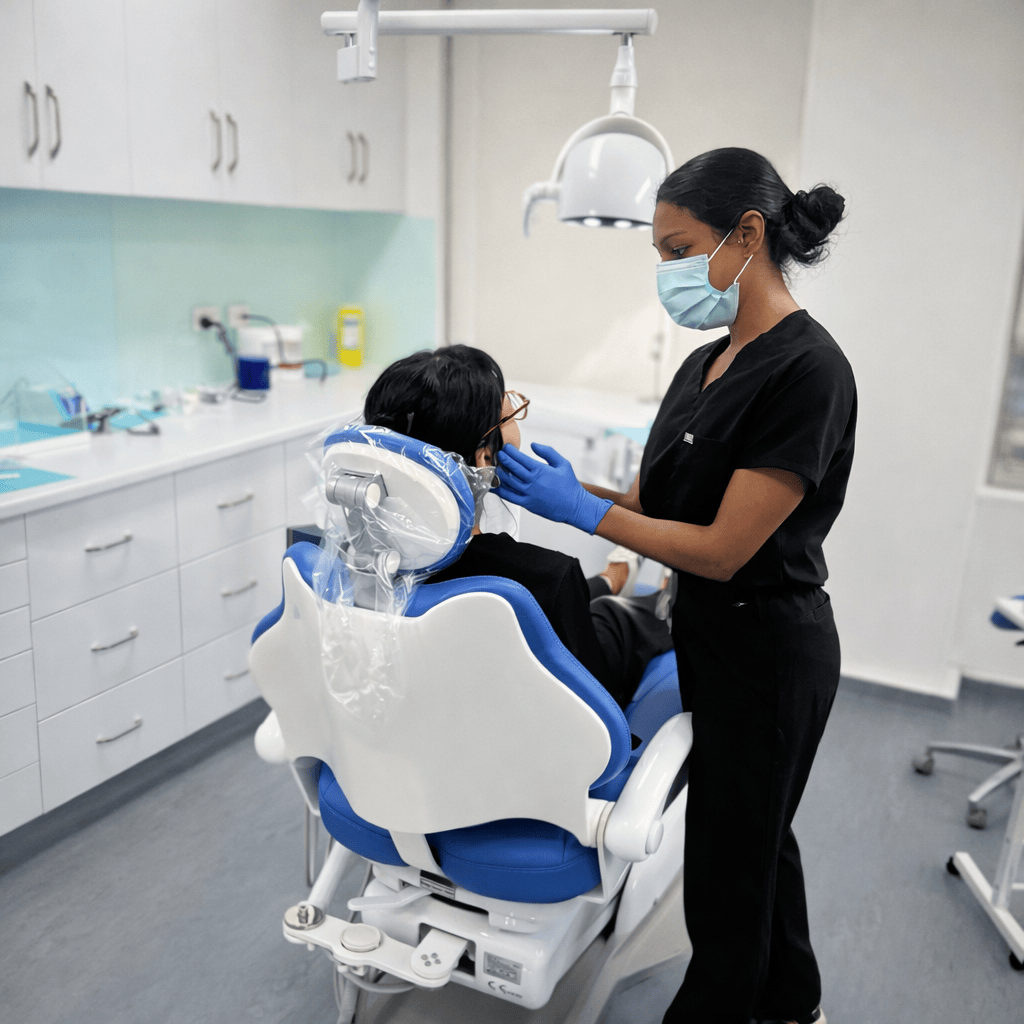
Assessment for TMJ ear pain
Ear pain has several possible causes. We assess whether a painful TMD is present and whether your symptoms behave like referred jaw pain.
This may include:
- checking jaw movement and joint function
- examining chewing muscles for familiar pain
- looking at chewing, yawning or clenching triggers
- reviewing relevant dental or ENT findings
Because of this, people with similar ear symptoms may require different TMJ treatment approaches.
If TMD appears to be contributing, care is directed at the diagnosed jaw problem. Care may include education, reducing aggravating jaw behaviours, exercises or rehabilitation, and an oral appliance where indicated.
Where another cause is suspected, appropriate medical or ENT review may be recommended.
When to seek an assessment
Ear pain persists after ear assessment
Jaw and ear pain occur together
Jaw and ear pain occur together
Ear and jaw symptoms change together
Your GP, dentist or ENT suspects TMJ involvement
Previous assessment has not explained symptoms
Treatment Options
Learn about TMJ treatment approaches
Our approach to TMJ care
Whole-body care guided by diagnosis
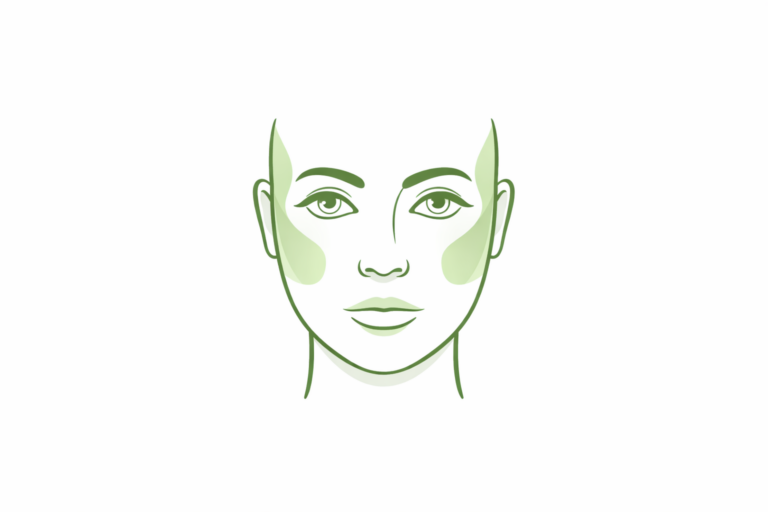
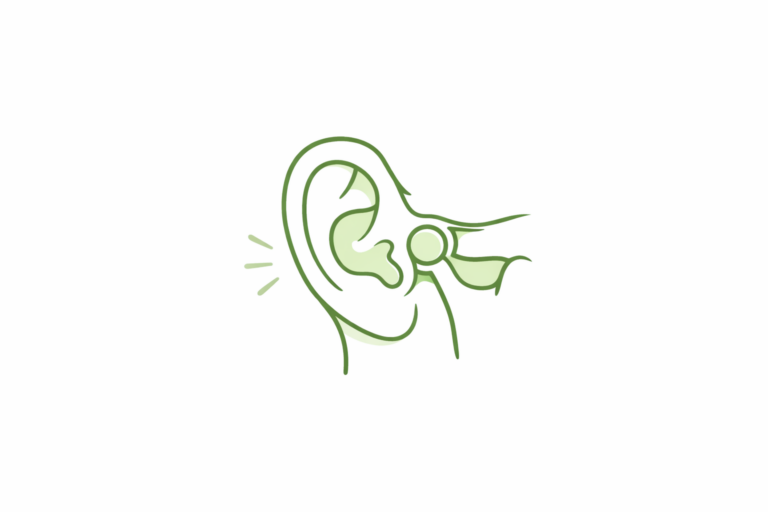
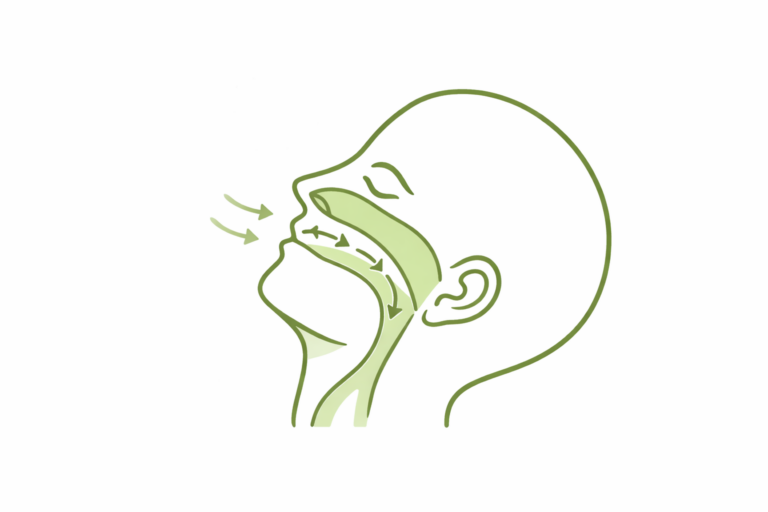
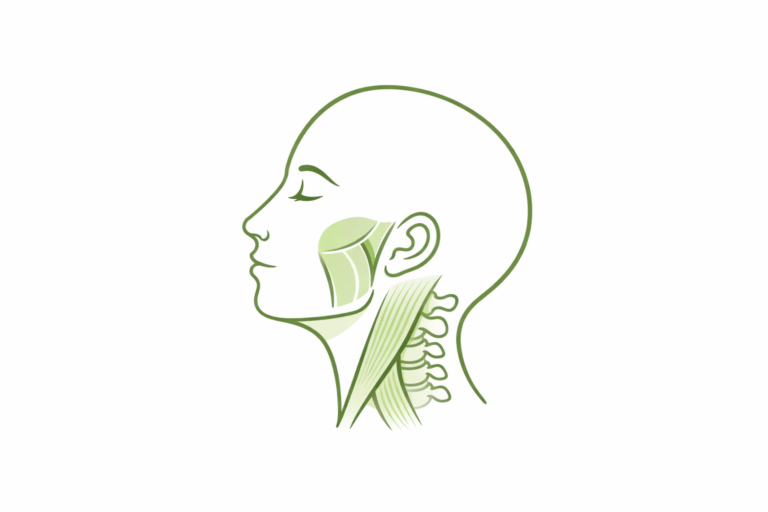
TMJ symptoms rarely come from the jaw alone. They can involve joint mechanics, muscle tension, bite function, posture, breathing, and sleep. At TMJ Centre Melbourne, care begins with understanding why symptoms are occurring. Treatment decisions follow diagnosis, not symptom labels. Care plans are personalised and often combine approaches, with progress reviewed and adjusted over time.
Diagnosis first
Whole-body assessment
Multidisciplinary care
Staged treatment
Evidence-Informed Care
We use recognised diagnostic frameworks and current literature to help guide assessment and treatment planning where relevant.