
Targeted Therapeutic Treatments
Focused treatment for specific muscle and soft-tissue findings
Targeted muscle and soft-tissue treatments may be considered when your assessment identifies a specific painful or irritated area, such as a tender muscle trigger point, tight or protective muscles, or local soft-tissue irritation.
These treatments are directed at the area identified during your examination. They are not used as a general treatment for all jaw pain and are recommended only when the findings suggest they may be helpful.
What this involves
Treating a specific painful area
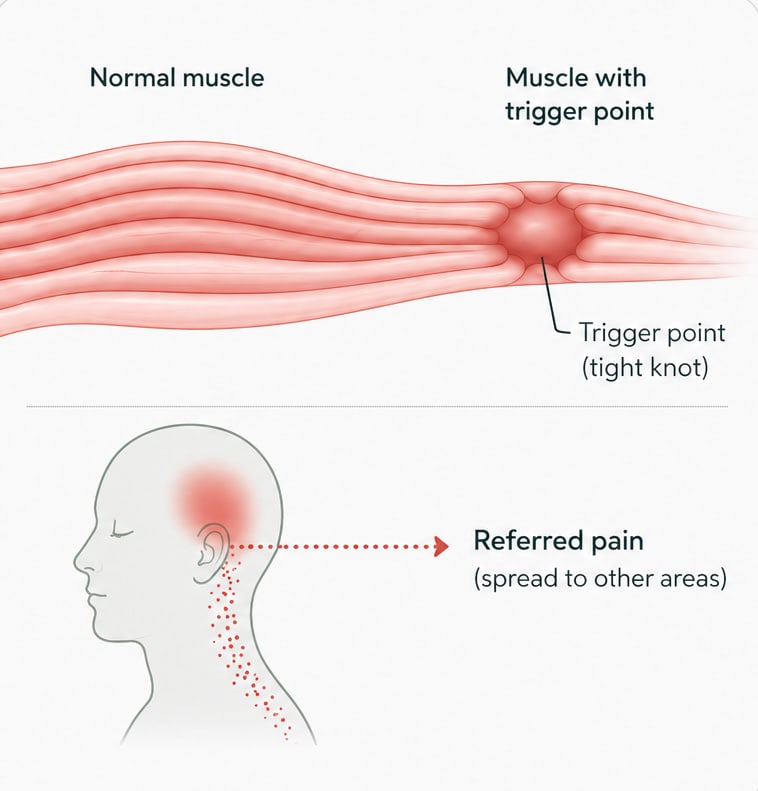
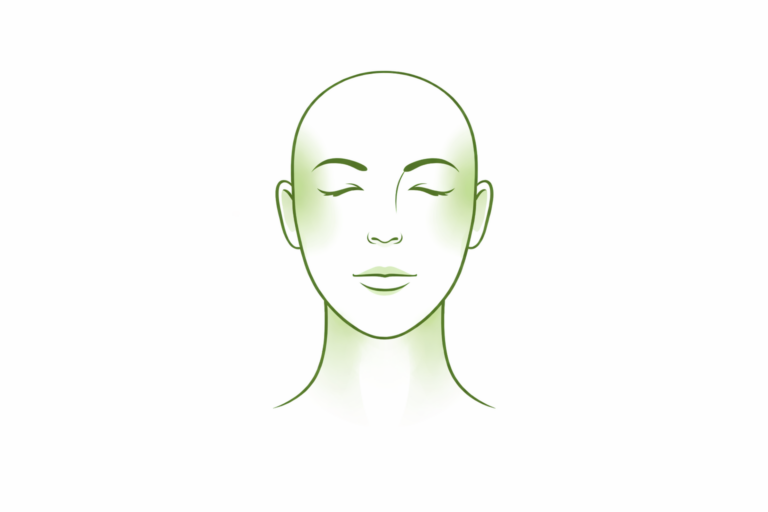
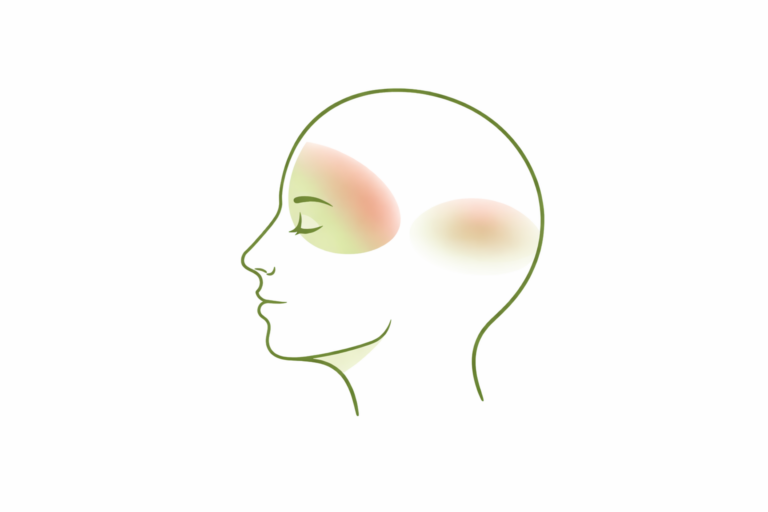
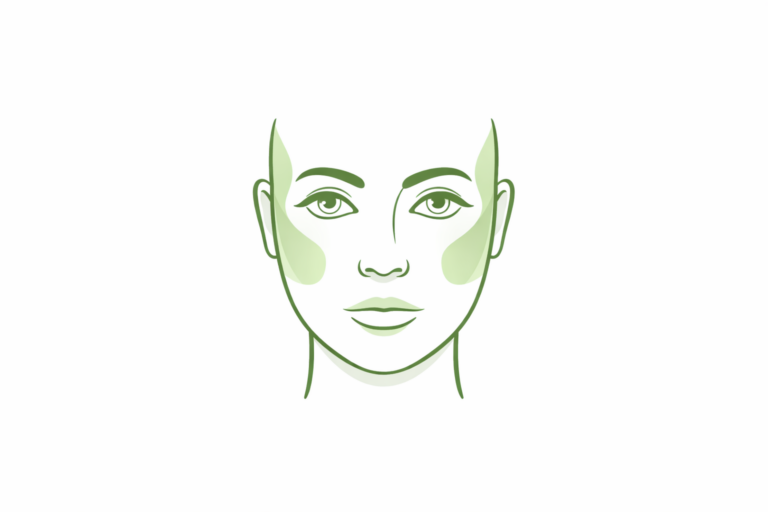
During an examination, pressure over part of a jaw muscle may reproduce a patient’s familiar pain or refer pain to another area, such as the temple, cheek, teeth or around the ear.
These sensitive areas are sometimes described as “trigger points.” However, they are not necessarily fixed knots or damaged areas within the muscle. We use the finding as one part of the overall assessment rather than assuming it is the sole cause of the pain.
What it can feel like
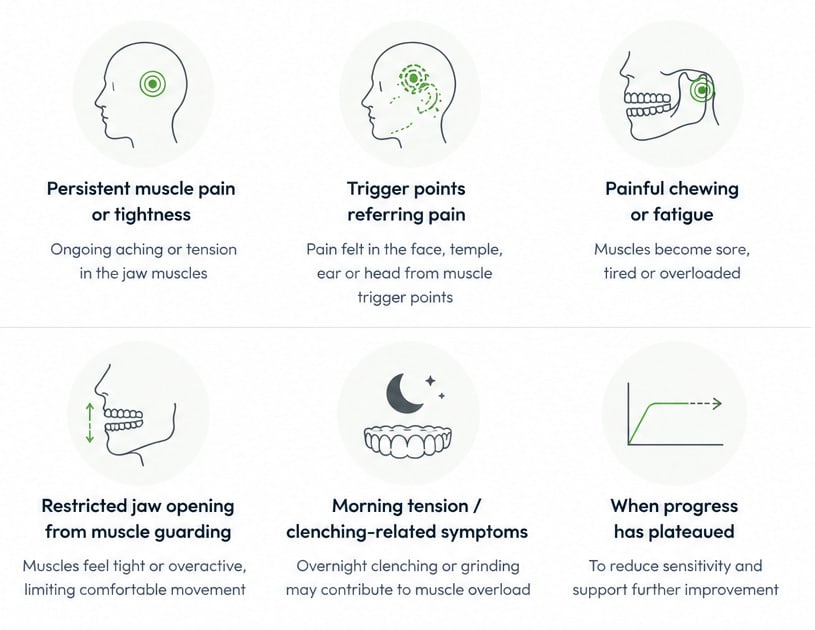
- Deep or aching muscle pain
- Pain associated with chewing, opening or sustained jaw use
- A tender area that reproduces familiar symptoms when pressed
- Pain felt beyond the area being examined
Why we treat it
In selected cases, reducing sensitivity in a painful muscle or soft-tissue region may make jaw movement more comfortable and support exercises, movement retraining or other parts of treatment.
Why it may be used
Guided by individual patterns identified in assessment
Similar symptoms can arise from different conditions. Targeted treatment is considered only when the history and examination suggest that a local muscle, ligament or attachment site is relevant to the patient’s familiar symptoms.
01
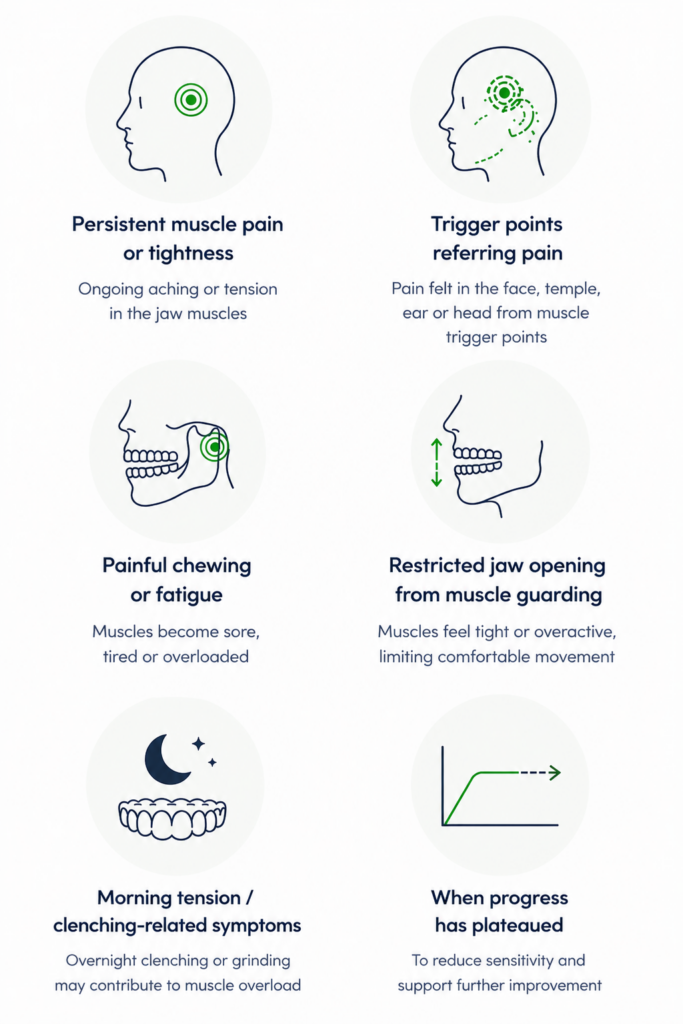
Muscle involvement - Familiar pain is reproduced through jaw movement or examination of the relevant muscles.
02
Movement patterns - Chewing, opening or repeated jaw use increases symptoms or restricts comfortable movement.
03
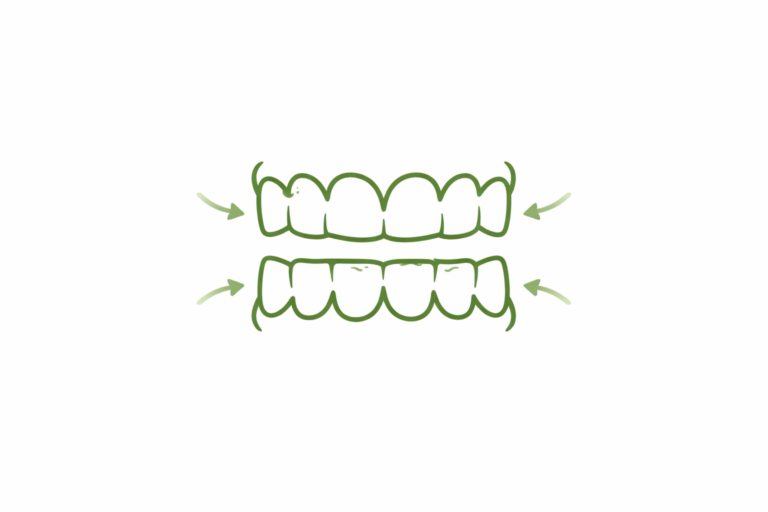
Clenching and bracing — Daytime jaw bracing, sustained clenching or repeated use may increase muscle loading in some patients.
04
Persistent symptoms — Local pain or sensitivity is limiting jaw function or progress with initial conservative care.
“Treatment is selected when examination findings reproduce familiar symptoms and suggest a relevant local muscle or soft-tissue contributor.”
Tailored selection
No single approach applies to every case
Targeted procedures are considered only when the likely benefit justifies the treatment and its risks. For many patients, education, self-management, exercises and gradual return to normal jaw function remain the most important parts of care.
This may include:
Dry needling
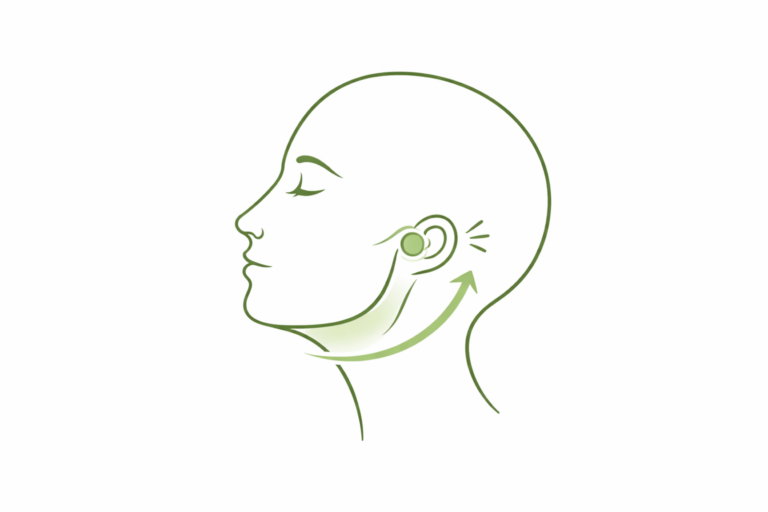
A fine, sterile needle is inserted into a selected sensitive region of a muscle.
Why it is used:
- To reduce muscle tension and local sensitivity
- To improve pressure tolerance within painful muscles
- To help restore more normal muscle function
How it works:
Needling can disrupt the trigger point, improve local blood flow, and reduce heightened pain sensitivity within the muscle.
Clinical studies suggest dry needling may reduce pain and improve jaw movement in patients with myofascial TMD, particularly in the short term.
Trigger point injections
- A small amount of local anaesthetic is injected into painful muscle trigger points.
Why it is used:
- When muscle pain is more persistent or irritable
- When dry needling alone has not been sufficient
- To reduce pain and allow improved movement
How it works:
The injection helps reduce pain sensitivity and muscle guarding, allowing the muscle to relax and function more normally.
This may make it easier for other treatments, such as movement retraining or splint therapy, to be more effective.
Targeted corticosteroid injections
(selected cases only)
A small amount of steroid is injected into a specific painful ligament or attachment-site. It may be considered when assessment identifies local inflammation or suspected irritation.
Why it is used:
- pain is persistent and clearly localised to a ligament or attachment site
- Examination reproduces the patient’s familiar symptoms
- symptoms have not improved sufficiently with initial conservative treatment
- local pain and irritation are limiting comfortable jaw movement
How it works:
Corticosteroid medication is intended to reduce local inflammation and irritation.
Targeted corticosteroid injections are not a routine treatment for jaw pain. They are considered only in selected cases.
Care is introduced in a staged way, rather than combining multiple interventions unnecessarily.
Part of a broader plan
One part of a complete approach
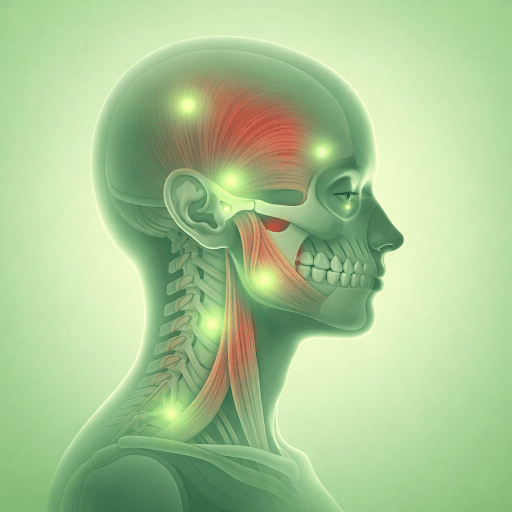
Considering the whole system
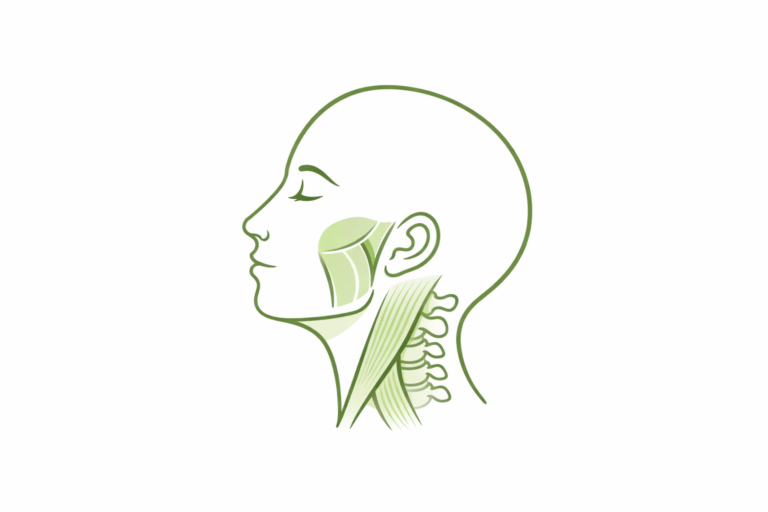
Muscle activity and coordination
Joint mechanics and loading
Posture and daily habits
Behavioural and functional patterns
When It May Help
When specific local contributors are identified
Targeted muscle or soft-tissue treatment may be considered when:
muscle trigger points are contributing to pain
symptoms are localised and reproducible on examination
movement is limited due to muscle or soft tissue sensitivity
symptoms are persistent despite other care
These approaches are used selectively, based on assessment findings, and integrated into a broader treatment plan.
Treatment Options
Learn about TMJ treatment approaches
Our approach to TMJ care
Whole-body care guided by diagnosis
TMJ symptoms rarely come from the jaw alone. They can involve joint mechanics, muscle tension, bite function, posture, breathing, and sleep. At TMJ Centre Melbourne, care begins with understanding why symptoms are occurring. Treatment decisions follow diagnosis, not symptom labels. Care plans are personalised and often combine approaches, with progress reviewed and adjusted over time.
Diagnosis first
Whole-body assessment
Multidisciplinary care
Staged treatment
Evidence-Informed Care
We use recognised diagnostic frameworks and current literature to help guide assessment and treatment planning where relevant.