

Ear pain is often assumed to be caused by an ear infection, but that is not always the case. Because the temporomandibular joint (TMJ) sits immediately in front of the ear, pain arising from the jaw joint or the surrounding muscles can sometimes feel as though it is coming from the ear itself. This is commonly referred to as TMJ ear pain.
You may notice pain around the ear when chewing, yawning, talking or clenching your teeth. Some people also experience jaw pain, headaches or a feeling of fullness in the ear at the same time.
While TMJ disorders can contribute to ear pain, they are only one of several possible causes. Ear pain may also arise from the ear itself, the teeth, throat, sinuses, salivary glands or nearby nerves. Understanding what is causing your symptoms is important because the most appropriate treatment depends on the underlying diagnosis.
Can TMJ disorders cause ear pain?
Yes. TMJ disorders can contribute to pain felt in or around the ear.
The TMJ connects your lower jaw to your skull and works together with the muscles that allow you to chew, speak and yawn. Because the joint sits so close to the ear, pain from the joint or the surrounding muscles may be felt in front of the ear, behind the jaw, along the side of the face or into the temple.
People describe these symptoms in different ways. You might notice:
- ear pain without an obvious ear infection
- jaw and ear pain at the same time
- pain in front of the ear
- a sore jaw near the ear
- pain under the ear behind the jaw bone
- discomfort when chewing or talking
Some people also report a feeling of fullness in the ear, ringing in the ears (tinnitus) or dizziness. While these symptoms can occur alongside TMJ disorders, they are not specific to the jaw and may also require assessment by your GP, an ear, nose and throat (ENT) specialist or an audiologist.
Ear pain rarely occurs on its own
Several symptoms often occur together
TMJ disorders rarely present with a single symptom. Many people experience a combination of symptoms that can change over time.
Along with TMJ ear pain, you may also notice:
- jaw pain or stiffness
- jaw clicking or popping
- headaches around the temples
- neck pain or muscle tension
- facial aching
- difficulty chewing or opening your mouth comfortably
Having one or more of these symptoms does not necessarily mean you have a TMJ disorder. They do, however, help build a clearer picture when considered together during a comprehensive assessment.
The jaw does not work in isolation
The jaw is closely connected to the muscles of the face, head and neck. It can also be influenced by posture, breathing patterns, sleep quality and habits such as clenching or grinding your teeth.
This is why TMJ ear pain often occurs alongside headaches, facial pain or neck discomfort rather than as an isolated symptom.
Looking at the jaw within the context of your overall health helps identify the factors that may be contributing to your symptoms and guides a more personalised approach to care.
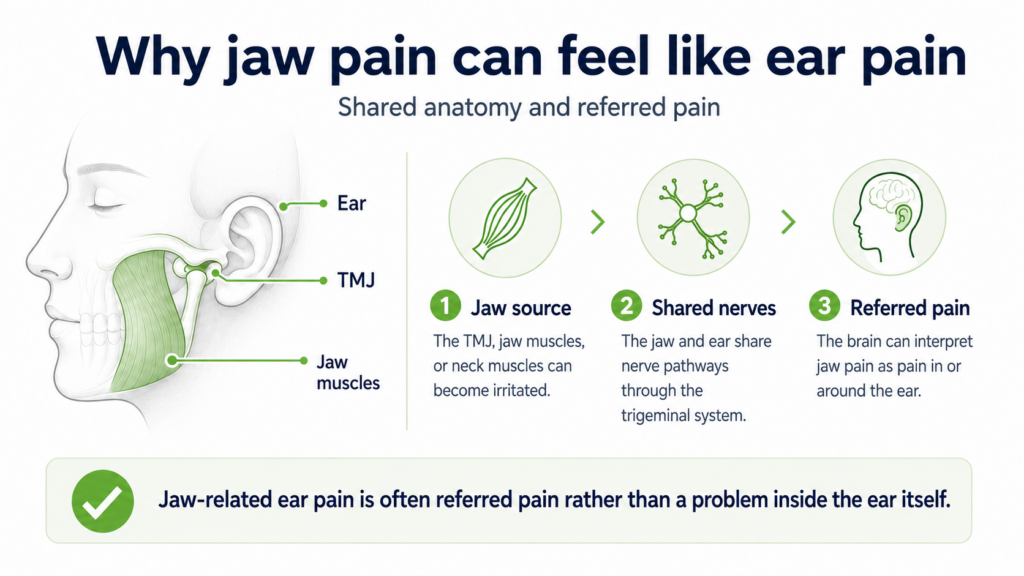
Why TMJ can cause ear pain
There are two main reasons TMJ disorders can feel like an earache.
The first is anatomy. The jaw joint sits immediately in front of the ear, so pain arising from the joint can easily be felt nearby.
The second is shared nerve pathways. The jaw joint, chewing muscles and parts of the ear are supplied by closely related nerves. Because these structures communicate through the same sensory pathways, the brain may interpret pain from the jaw as though it is coming from the ear.
The chewing muscles can also contribute. The masseter and temporalis muscles, which play an important role in chewing, may become overloaded through clenching, grinding or prolonged muscle tension. Pain from these muscles can spread into the temple, cheek, jaw, teeth and ear region.
This helps explain why some people experience ear pain even when an ear examination is completely normal.
Signs your jaw may be contributing to ear pain
While ear pain can have many causes, certain symptoms may suggest that the jaw is playing a role.
You may notice that your ear pain:
- becomes worse when chewing, talking or yawning
- changes when you clench your teeth
- occurs alongside jaw pain or stiffness
- is accompanied by jaw clicking or popping
- is associated with headaches around the temples
- feels worse after eating tough or chewy foods
Some people also experience morning jaw tightness, tenderness in the chewing muscles or discomfort around the side of the face.
These symptoms do not confirm a TMJ disorder, but they can help identify patterns that guide a clinical assessment.
Other causes of ear pain
Not every earache is caused by the jaw
Although TMJ disorders are a recognised cause of referred ear pain, they are only one possibility. Ear pain can also arise from the ear itself or from other nearby structures.
Other possible causes include:
- ear infections
- wax build-up
- sinus conditions
- dental problems
- throat infections
- salivary gland conditions
- nerve-related pain
- neck conditions that refer pain towards the ear
Dental problems are particularly important to consider. A cracked tooth, inflamed dental nerve, gum infection or impacted wisdom tooth can sometimes produce pain that feels very similar to TMJ ear pain.
Because several conditions can cause similar symptoms, assessment aims to identify the underlying source of the pain rather than assuming it is coming from the jaw.
In some cases, more than one condition may be contributing at the same time.
How TMJ ear pain is assessed
A comprehensive assessment begins with understanding your symptoms and how they have developed over time.
You may be asked about:
- where the pain is felt
- when it started
- whether it changes with chewing or jaw movement
- clenching or grinding habits
- headaches or facial pain
- neck symptoms
- whether your ear has already been examined
- previous dental treatment or jaw injuries
The physical examination looks at more than the jaw joint itself. It may include assessment of jaw movement, joint sounds, chewing muscles, bite, teeth and neck function to help determine whether the jaw is contributing to your symptoms.
Because TMJ disorders are often influenced by multiple factors, the assessment considers how these findings fit together rather than focusing on a single symptom in isolation.
Diagnosis before treatment
People with similar symptoms do not always require the same treatment.
For example, two people may both experience ear pain near the jaw, but one person’s symptoms may be related to the temporomandibular joint, while another person’s pain may be coming from the chewing muscles, a dental condition or another medical issue.
This is why treatment is always guided by the underlying diagnosis rather than the symptom alone.
Understanding what is contributing to your symptoms helps ensure that care is appropriate, targeted and reviewed over time as your symptoms and jaw function change.
When further investigation may be needed
Most people with TMJ ear pain do not need imaging.
A detailed history and physical examination often provide enough information to understand whether the jaw is contributing to your symptoms.
In some situations, additional investigations or referral may be recommended. This may include imaging if the diagnosis remains unclear, symptoms are persistent, there has been significant trauma, or another condition needs to be excluded.
Referral to your GP, dentist, ear, nose and throat (ENT) specialist or another healthcare professional may also be appropriate if your symptoms suggest that the pain is not primarily related to the jaw.
How TMJ ear pain may be managed
Treatment for TMJ ear pain depends on what is contributing to your symptoms. Not everyone with jaw-related ear pain requires the same approach, which is why management begins with a clear diagnosis rather than the symptom alone.
For many people, care starts with conservative strategies that aim to reduce strain on the jaw and support normal function. These may include:
- understanding the factors contributing to your symptoms
- temporarily avoiding very hard or chewy foods
- reducing habits such as gum chewing
- modifying activities that involve repeated wide mouth opening
- applying heat or cold where appropriate
- addressing clenching or grinding habits
Depending on your assessment findings, your care plan may also include jaw exercises, manual therapy, an oral appliance (orthotic), or strategies that address contributing factors such as sleep, posture or muscle tension.
For some people, care may involve a combination of dental and musculoskeletal approaches. Treatment is introduced in stages and reviewed over time, recognising that symptoms and jaw function can change.
When should you seek medical care?
Although TMJ disorders can contribute to ear pain, some symptoms require prompt medical assessment to rule out other causes.
Arrange a medical review if your ear pain is accompanied by:
- fever or signs of infection
- ear discharge
- significant hearing loss or sudden changes in hearing
- severe dizziness or problems with balance
- facial swelling
- difficulty swallowing
- persistent one-sided throat pain
- a lump in the neck
- numbness or other neurological symptoms
- unexplained weight loss
- recent trauma to the face or jaw
These symptoms do not necessarily indicate a serious condition, but they should not be assumed to be related to the jaw without appropriate assessment.
How TMJ Centre Melbourne approaches TMJ ear pain
At TMJ Centre Melbourne, assessment begins by understanding why your symptoms are occurring rather than assuming they are caused by the jaw.
A comprehensive TMJ assessment considers how the jaw joints, chewing muscles, bite, clenching or grinding habits, neck function and other contributing factors may be influencing your symptoms. Where appropriate, this also includes consideration of sleep, breathing patterns and overall jaw function.
Because TMJ disorders are often multifactorial, treatment is guided by clinical findings rather than a single symptom. Care is tailored to the individual and adjusted over time based on how symptoms and jaw function respond.
If your ear has already been assessed and no clear ear condition has been identified, or if your ear pain occurs alongside jaw pain, headaches, clenching, clicking or discomfort when chewing, a TMJ assessment may help determine whether the jaw is contributing to your symptoms.
Frequently asked questions
Yes. Pain arising from the temporomandibular joint or the surrounding muscles can be felt in or around the ear because these structures share closely related nerve pathways.
If your ear examination is normal but symptoms change with chewing, yawning or jaw movement, the jaw may be contributing to the pain. However, persistent or concerning ear symptoms should always be medically assessed.
Pain that becomes worse while chewing may suggest that the jaw joint or chewing muscles are involved. It can also occur with certain dental conditions or other problems affecting nearby structures.
Because several conditions can produce similar symptoms, assessment is important before determining the cause.
Some people with TMJ disorders report a feeling of fullness in the ear or ringing in the ears (tinnitus). While these symptoms can occur alongside jaw disorders, they are not specific to TMJ and may have other ear or neurological causes.
If these symptoms are persistent, worsening or accompanied by hearing changes, further medical assessment may be recommended.
There is no single symptom that confirms the jaw as the source of ear pain. However, the jaw may be contributing if your symptoms occur alongside jaw pain, clicking, clenching, headaches, difficulty chewing or discomfort when opening your mouth.
A comprehensive assessment looks at how your symptoms relate to jaw movement, muscle function and other contributing factors before determining whether the TMJ is involved.
The right starting point depends on your symptoms.
If you have fever, ear discharge, sudden hearing loss, significant dizziness, facial swelling or other concerning symptoms, seek medical assessment promptly.
If your ear has already been examined and your symptoms occur alongside jaw pain, clenching, headaches, clicking or discomfort when chewing, a TMJ assessment may help determine whether the jaw is contributing.
Key takeaways
TMJ ear pain can feel very similar to an earache, even when the ear itself is healthy. Because the jaw joint sits close to the ear and shares nerve pathways with nearby structures, pain from the jaw can sometimes be felt in or around the ear.
However, not all ear pain is related to the jaw. Ear symptoms can have many different causes, which is why assessment is important. Understanding whether the pain is coming from the jaw, the ear or another nearby structure helps guide the most appropriate approach to care.