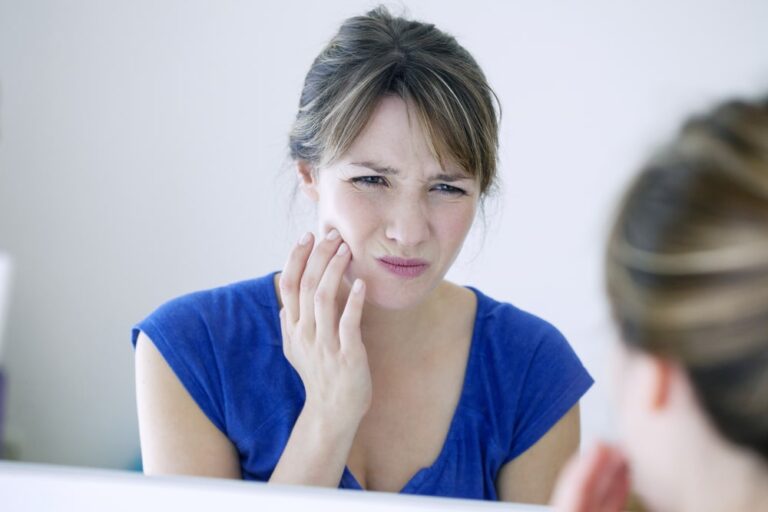

Jaw clicking is common. For many people, it is little more than an occasional noise when chewing, talking or yawning. On its own, a clicking jaw does not necessarily mean there is damage to the joint or that treatment is needed.
If jaw clicking becomes painful, starts catching or locking, or makes it difficult to eat, speak or open your mouth comfortably, it is worth having it assessed. These changes can suggest that the jaw joint, the surrounding muscles, or both are not working as they should.
What is jaw clicking?
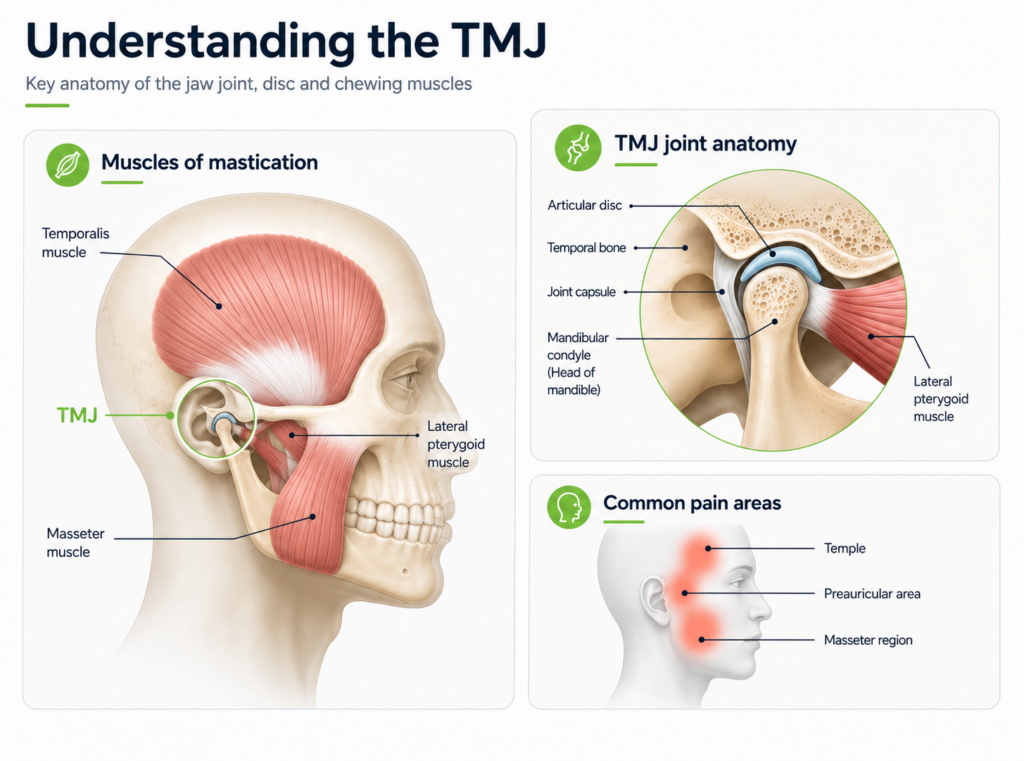
Jaw clicking refers to a clicking, popping or snapping sound that occurs when you open or close your mouth. It comes from the temporomandibular joint (TMJ), the joint that connects your lower jaw to your skull. You have one TMJ on each side of your face, just in front of your ears.
The TMJ works together with the jaw muscles, ligaments and a small cartilage disc that helps the joint move smoothly. When one or more of these structures is not moving as expected, you may notice jaw clicking, popping or a feeling that the jaw catches during movement.
Jaw clicking rarely happens on its own
Many people experience more than just jaw clicking. Symptoms often occur together and can change over time. You might also notice:
- jaw pain or stiffness
- jaw locking or catching
- ear discomfort, fullness or ringing
- neck pain or muscle tension
- headaches or facial pain
- difficulty chewing or opening your mouth fully
These symptoms do not always mean you have the same underlying problem. TMJ disorders are often influenced by several factors at once, so understanding what is contributing to your symptoms is an important first step.
Why does my jaw click?
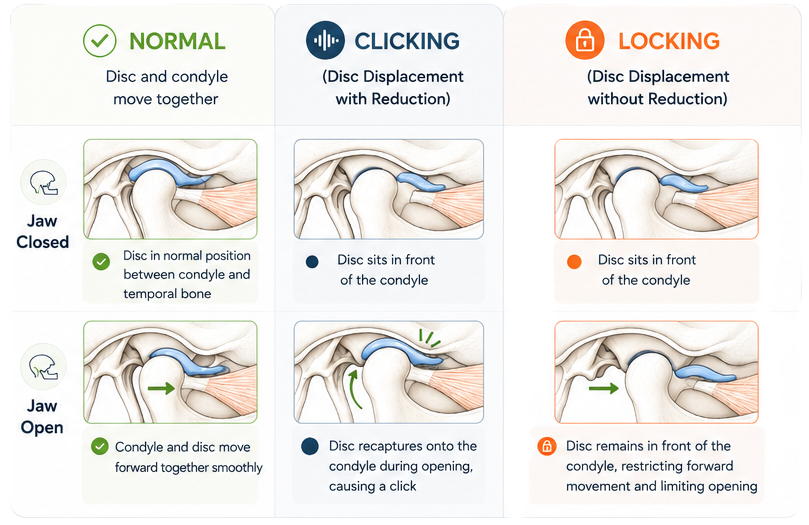
A jaw click or pop commonly occurs when the small cartilage disc inside the temporomandibular joint is not moving in its usual position. This disc normally sits between the lower jawbone and the skull and helps the joint move smoothly.
As you open your mouth, the rounded end of the lower jaw, called the condyle, may move back underneath the disc. This movement can produce a click or pop. In some people, the disc moves out of position again as the mouth closes, which can create a second click.
Although the sound can be concerning, jaw clicking does not always mean that the joint is damaged or getting worse. Many people have painless joint noises for years without developing pain, locking or difficulty moving their jaw.
The jaw is a complex joint, and clicking does not always have a single cause. In many cases, several factors contribute at the same time.
Common contributing factors include:
- clenching or grinding your teeth
- increased load on the jaw muscles and joints
- injury or trauma to the jaw
- arthritis affecting the joint
- inflammation or irritation within the joint
- repeated or prolonged wide opening, such as frequent yawning or lengthy dental treatment
- changes in the way the jaw moves over time
Stress is also commonly associated with increased jaw muscle activity. While stress does not directly cause the joint to click, it can increase clenching, grinding or muscle tension, which may place additional load on the jaw joint and make symptoms more noticeable.
The jaw does not work in isolation
The temporomandibular joints work closely with the muscles of the face, head and neck. They are also influenced by breathing patterns, sleep quality, posture and everyday habits such as clenching or chewing gum.
This means that people with jaw clicking often experience symptoms beyond the jaw itself. Some notice headaches, neck pain or ear discomfort. Others develop muscle tightness that affects chewing, talking or yawning.
Because several factors can contribute at once, a clicking jaw is best understood in the context of your overall symptoms rather than as an isolated joint problem.
When jaw clicking may be less concerning
In many people, jaw clicking is not painful and does not affect everyday activities. If the jaw opens normally, the click has been present for a long time without changing, and you can eat and speak comfortably, active treatment may not be necessary.
Rather than focusing on the sound alone, it is more helpful to consider how the jaw is functioning.
Questions to ask include:
- Is the clicking painful?
- Has the clicking become more frequent?
- Is the jaw catching or locking?
- Has your mouth opening become smaller?
- Has chewing or speaking become more difficult?
If the answer to these questions is no, monitoring the symptoms may be all that is needed. If the answer changes over time, it is worth arranging an assessment.
When should jaw clicking be assessed?
Jaw clicking is more likely to need assessment when it is accompanied by other symptoms or begins to interfere with normal jaw function.
Consider seeking an assessment if you experience:
- jaw clicking with pain
- jaw locking or catching
- difficulty opening your mouth fully
- changes in your bite
- headaches associated with jaw tension
- ear pain, fullness or ringing
- persistent jaw stiffness, particularly in the morning
- pain when chewing or talking
A jaw that clicks without pain is different from one that clicks and becomes increasingly difficult to move. Pain, restricted opening or locking can indicate that the joint, the surrounding muscles, or both require further assessment.
The aim of assessment is not simply to identify the source of the clicking. It is to understand why it is happening, what factors may be contributing, and whether any changes in jaw function require treatment.
What does a locked jaw mean?
The term locked jaw can describe several different problems, which is why it is important not to assume there is a single cause.
Some people experience brief episodes where the jaw catches before continuing to open or close normally. Others find their mouth will not open as wide as usual, making it difficult to eat, yawn or speak. Less commonly, the jaw may become stuck open after opening the mouth widely.
Although these situations are often grouped together as “jaw locking”, they can have different underlying causes and may require different approaches to management.
A jaw that locks closed
When the jaw becomes difficult to open, it may be related to the way the cartilage disc inside the joint is moving. In some cases, the disc no longer moves back into its usual position as the mouth opens. This can limit jaw movement and may cause pain, a feeling that the jaw is blocked, or reduced mouth opening.
Restricted jaw opening can also occur because of muscle pain, inflammation or muscle guarding. This is when the muscles tighten to protect the joint, making the jaw feel stiff even if it is not physically blocked.
A clinical assessment helps determine which structures are contributing to the restriction.
A jaw that becomes stuck open
A jaw that is stuck open is a different situation. This may happen when the lower jaw moves too far forward and cannot easily return to its normal position. It can occur after yawning, prolonged dental treatment, trauma or other activities that involve opening the mouth very wide.
If your jaw becomes stuck open and you cannot close it, do not try to force it back into place. Seek urgent medical or dental care.
Jaw clicking on one side
Some people notice jaw clicking on only one side, while others experience clicking in both joints.
A click on one side does not necessarily mean the problem is limited to that joint. The jaw works as a pair, with both temporomandibular joints moving together every time you open and close your mouth. Changes affecting one joint can alter the way the jaw moves overall and may influence the muscles on both sides of the face.
Whether the clicking occurs on the left, right or both sides, the assessment process is the same. The focus is on understanding how the jaw is moving, whether there is pain or restriction, and what factors may be contributing to the symptoms.
How jaw clicking is assessed
A comprehensive assessment begins by understanding your symptoms and how they have changed over time.
You may be asked about:
- when the jaw clicking first started
- whether it is painful
- if the jaw catches or locks
- headaches or facial pain
- ear symptoms such as fullness or ringing
- clenching or grinding habits
- previous injuries or trauma
- whether symptoms are worse on waking or later in the day
The physical examination looks at more than the jaw joint itself. It may include assessment of jaw movement, joint sounds, muscle tenderness, bite, neck function and other factors that may influence how the jaw is working.
Is imaging always needed?
No. Imaging is not required for everyone with jaw clicking.
Many TMJ disorders can be diagnosed through a detailed history and physical examination. MRI or other imaging may be considered if symptoms are severe, persistent, associated with significant locking or trauma, or when imaging is needed to clarify the diagnosis after clinical assessment.
The decision to request imaging depends on the individual situation rather than the presence of a jaw click alone.
How jaw clicking may be managed
Not everyone with jaw clicking needs treatment. The most appropriate approach depends on what is contributing to the symptoms and whether the jaw is functioning normally.
Two people with similar symptoms may have different underlying causes. This is why treatment is guided by diagnosis rather than the presence of a click alone.
For many people, care begins with conservative measures that aim to reduce strain on the jaw and support normal movement.
These may include:
- understanding what is contributing to your symptoms
- temporarily avoiding very hard or chewy foods
- reducing habits such as gum chewing
- avoiding repeated wide mouth opening where possible
- applying heat or cold when appropriate
- addressing clenching or grinding habits
Where clinically indicated, your care plan may also include jaw exercises, manual therapy, an oral appliance (splint), or strategies that address contributing factors such as sleep, posture or muscle tension.
The jaw does not work in isolation. Depending on your assessment findings, it may also be important to consider how the neck, muscles, breathing patterns and sleep quality are influencing your symptoms.
Most people do not require a single treatment. Care is often introduced in stages and adjusted over time based on how symptoms and jaw function change.
When should you seek urgent medical care?
Although most cases of jaw clicking are not an emergency, some symptoms should be assessed promptly.
Seek urgent medical or dental care if:
- your jaw becomes stuck open and you cannot close it
- you cannot open your mouth enough to eat or drink
- symptoms begin after significant trauma to the face or jaw
- you develop swelling, fever or signs of infection
- you experience numbness or new neurological symptoms
- you notice a sudden change in your bite
- you develop significant hearing changes together with jaw symptoms
These symptoms do not always indicate a serious condition, but they should be assessed without delay.
How TMJ Centre Melbourne approaches jaw clicking
At TMJ Centre Melbourne, the first step is understanding why your jaw is clicking before considering treatment.
Assessment looks beyond the joint itself. It considers how the jaw muscles, teeth, bite, clenching or grinding habits, neck function, sleep and other contributing factors may be influencing your symptoms.
Because TMJ disorders are often multifactorial, care is tailored to the individual rather than based on the symptom alone. Treatment recommendations are guided by clinical findings and reviewed over time as symptoms and jaw function change.
Frequently asked questions
Jaw clicking while eating often occurs because the structures within the jaw joint are not moving together as smoothly as expected. In some people this relates to movement of the cartilage disc within the joint, while in others the surrounding muscles or joint irritation may contribute.
A clinical assessment helps determine what is driving the clicking and whether any treatment is appropriate.
Not necessarily.
Many people have painless jaw clicking for years without developing pain or changes in jaw function.
If the clicking is stable, your mouth opens normally and everyday activities such as eating and speaking are unaffected, treatment may not be needed.
An assessment is more appropriate if the clicking becomes painful, starts catching or locking, or affects how your jaw moves.
Sometimes, but not always.
Many people experience jaw clicking that never progresses.
If your jaw begins catching, opening less than usual or locking, it is worth having it assessed. Early assessment can help identify what is contributing to the change in jaw function.
Jaw clicking can occur on either the left or right side, or both.
Although the clicking may seem to come from one joint, both jaw joints work together whenever you open and close your mouth. An assessment considers how both joints and the surrounding muscles are functioning rather than focusing on the clicking side alone.
Stress does not directly cause jaw clicking, but it can increase habits such as clenching or grinding that place additional load on the jaw joints and muscles.
Because TMJ disorders often involve several contributing factors, assessment looks at the broader picture rather than attributing symptoms to stress alone.
Key takeaways
Jaw clicking is common and does not always indicate a serious problem. Many people experience occasional clicking without pain or changes in jaw function.
However, if jaw clicking is accompanied by pain, locking, restricted movement or difficulty eating or speaking, it is worth having it assessed. Understanding what is contributing to your symptoms is the first step towards determining whether treatment is appropriate and what approach may be most suitable.